Not all fastening challenges can be solved with standard components. Learn how PSM’s fasteners for special materials deliver reliable performance in composites, engineered plastics, and advanced alloys where conventional fasteners fall short. Standard fasteners fail in composites. Here’s what works instead.
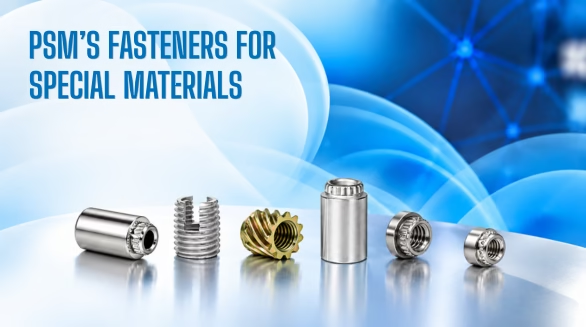
Standard fasteners work perfectly—until they don’t. When manufacturing engineers encounter advanced composites, engineered plastics, or specialty alloys, conventional fastening methods often cause delamination, cracking, or catastrophic assembly failures. These materials demand specialized solutions that address unique substrate properties without compromising strength or durability. PSM Fasteners has spent 85+ years developing fastening technologies specifically engineered for materials where off-the-shelf components fall short.
Why Special Materials Demand Specialized Fastening Solutions
Special materials present challenges that standard fasteners simply cannot address. Carbon fiber composites crack under compression loads. Engineered plastics creep under sustained stress. Dissimilar metals create galvanic corrosion that weakens assemblies over time.
The Hidden Costs of Using Standard Fasteners on Special Materials
Manufacturing engineers who attempt to use standard fasteners on advanced materials frequently encounter expensive problems. Delamination in composite layups occurs when excessive clamping forces separate bonded layers. Thread stripping in softer substrates like PEEK or nylon leads to failed pull-out tests and rejected parts. Material damage during installation creates stress concentrations that propagate into cracks during thermal cycling.
These failures don’t just affect individual components. Assembly line shutdowns cost manufacturers thousands per hour. Field failures trigger warranty claims and product recalls. Design iterations extend time-to-market for new products. The true cost of incompatible fasteners extends far beyond the price of replacement parts.
Material Compatibility Requirements Engineers Must Consider
Different substrate categories require fundamentally different fastening approaches. Thermoplastic materials like polycarbonate and ABS respond well to heat or ultrasonic installation but can creep under constant loads. Thermoset composites like carbon fiber epoxy provide excellent strength but crack easily during drilling or compression. Metal alloys ranging from aluminum to titanium each have unique galvanic compatibility requirements.
Temperature sensitivity also plays a critical role. Some plastics degrade above 150°C, eliminating heat-staking as an installation option. Others remain stable to 260°C but require specific torque specifications to prevent compression failure. Understanding these material behaviors determines which fastening technology will succeed.
🔧 Experiencing Fastener Failures in Composites or Engineered Plastics?
Our fastening engineers provide free technical consultations to help you select the right fastener technology for your specific material and application. No obligation—just expert guidance from specialists who understand advanced substrates.
Get Free Technical Consultation →Types of Fasteners for Special Materials
PSM offers specialized fastening technologies designed specifically for substrates beyond traditional sheet metal applications. Each solution addresses distinct material properties and installation requirements.
Threaded Inserts for Plastics and Composites
Threaded brass inserts for plastics create strong, reusable metal threads in substrates that cannot support direct screw installation. These inserts distribute loads across a larger surface area, preventing the pull-through failures common with self-tapping screws. Installation methods include ultrasonic, heat-staking, and press-in designs depending on material type.
Brass construction offers excellent corrosion resistance and prevents galvanic reactions with aluminum or steel components. Knurled or undercut external profiles provide mechanical retention that resists torque-out during assembly and field service. Thread sizes range from M2 to M10, accommodating applications from consumer electronics to automotive assemblies.
Direct Screw Fixings for Engineered Plastics
Thread-forming PT screws for engineered plastics offer a simpler alternative when reusability isn’t required. These specialized screws cut precise threads during installation, creating intimate contact between screw threads and plastic substrate. The result is pull-out resistance that often exceeds that of molded-in bosses.
PT screws work exceptionally well in semi-crystalline plastics like nylon, acetal, and polypropylene. Their trilobular thread profile creates material flow rather than cutting, reducing internal stress. This makes them ideal for high-volume assembly where installation speed and cost efficiency matter.
Specialized Fasteners for Composites and Hybrid Materials
Carbon fiber, fiberglass, and aramid composites require fasteners that minimize compression damage while maintaining clamp load. Spring steel and plastic fasteners provide this combination through designs that accommodate thermal expansion mismatches and vibration loads.
Composite-specific fasteners often incorporate features like enlarged bearing areas to distribute clamping forces. Some designs use bonded bushings that become integral to the laminate structure. Others employ floating attachments that permit differential thermal expansion between dissimilar materials without creating destructive stresses.
How Installation Method Impacts Material Compatibility
The installation process itself can make or break fastener performance in special materials. Choosing the wrong method causes material damage that undermines the entire assembly.
Ultrasonic vs Heat Installation for Thermoplastics
Each excel with different plastic families. Ultrasonic installation works best with amorphous plastics like polycarbonate, ABS, and polysulfone. High-frequency vibration generates localized melting at the insert interface without affecting surrounding material. Installation completes in under two seconds with minimal thermal impact.
Heat-staking suits semi-crystalline plastics including nylon, acetal, and polypropylene. Controlled temperature application allows the insert to displace molten plastic, which then solidifies around knurled retention features. While slower than ultrasonic methods, heat installation accommodates filled plastics and glass-reinforced compounds that resist vibration welding.
Press-In and Self-Clinching Technologies
Press-in inserts require only mechanical force, eliminating thermal concerns entirely. These designs use interference fits and mechanical retention features to achieve permanent installation. They work well in filled plastics, thermoset composites, and materials sensitive to heat or vibration.
Self-clinching fasteners extend this concept to thin-gauge special alloys. The fastener displaces base material into an undercut profile during installation, creating a strong mechanical interlock. This technology excels in aluminum, brass, and stainless steel sheets too thin for conventional tapping.
💰 Stop Wasting Money on Field Failures and Production Rework
Choosing the right fastener the first time prevents costly assembly failures, warranty claims, and production delays. Our custom engineering team helps you avoid expensive mistakes with material-specific testing and validation before full-scale production.
Request Custom Engineering Support →What PSM Fasteners Does Differently in Custom Solutions
Not every fastening challenge fits within standard product catalogs. PSM’s custom-engineered fastening solutions address unique requirements through collaborative engineering and rigorous testing.
ISO 9001:2015 Certified Design and Manufacturing
PSM operates under ISO 9001:2015 certified quality management systems that ensure consistent performance across custom and standard products. Every fastener undergoes dimensional verification, material certification, and functional testing before shipment. This quality framework supports applications in regulated industries including medical devices, aerospace, and automotive manufacturing.
Custom projects receive dedicated engineering support from initial concept through production validation. Engineers analyze load requirements, material compatibility, installation constraints, and environmental factors. Computer modeling predicts fastener performance under operational stresses. Physical prototypes undergo pull-out testing, torque analysis, and accelerated life cycling.
Technical Consultation and Application Engineering
PSM’s engineering team brings 85+ years of collective fastening expertise to every project. They’ve solved fastening challenges across hundreds of material combinations and thousands of unique applications. This experience translates into faster problem-solving and more reliable solutions.
Application engineering services include material selection guidance, installation method recommendations, and assembly process optimization. Engineers identify potential failure modes before they occur. They suggest design modifications that improve fastener performance or reduce installation costs. The result is fastening systems optimized for both performance and manufacturability.
Direct Screw Fixings vs Threaded Inserts: When to Use Each
Choosing between direct screw installation and threaded inserts depends on several application factors. Understanding these distinctions prevents over-engineering or under-specifying fastener solutions.
Reusability and Serviceability Requirements
Threaded inserts excel when assemblies require repeated disassembly for maintenance, upgrades, or repairs. The metal insert threads withstand dozens or hundreds of screw insertions without degradation. This makes them essential for consumer electronics, industrial equipment, and any application expecting field service.
Direct screw fixings work well in permanent assemblies where disassembly is rare or unnecessary. Single-use consumer products, sealed enclosures, and disposable medical devices often benefit from the cost savings and installation speed of direct screwing. The trade-off is reduced reusability and higher risk of thread stripping during any required disassembly.
Load Distribution and Pull-Out Strength
Inserts distribute pull-out loads across larger contact areas than direct screws. The insert’s external knurling or undercuts engage significantly more substrate material than screw threads alone. This advantage becomes critical in thin-wall plastics or low-density foams where pull-through resistance is limited.
PT screws can match insert performance in thicker, higher-density substrates. Their thread-forming action creates intimate contact along the entire thread engagement length. In semi-crystalline plastics with good flow properties, properly designed PT screws achieve pull-out strengths comparable to pressed-in inserts.
Industries That Demand Specialized Material Fasteners
Certain industry sectors routinely encounter materials that challenge conventional fastening approaches. These applications drive innovation in specialized fastener technologies.
Aerospace and Composite Structures
Aerospace manufacturers increasingly use carbon fiber composites to reduce weight while maintaining structural strength. These materials provide exceptional stiffness-to-weight ratios but crack easily under compression loads from standard fasteners. Specialized aerospace fasteners incorporate features like enlarged footprints, bonded bushings, and torque-limiting designs.
Lightning strike protection adds another layer of complexity. Composite structures require conductive pathways through fastener installations to dissipate electrical energy. PSM’s fastening solutions across automotive, aerospace, electronics, and medical sectors address these multi-faceted requirements through material selection and design optimization.
Medical Device Manufacturing and Biocompatible Materials
Medical devices often use specialized polymers like PEEK, PPSU, and medical-grade silicones that resist sterilization processes. These materials must maintain dimensional stability through repeated autoclaving cycles while meeting stringent biocompatibility standards. Fasteners for medical applications require material certifications, cleanroom manufacturing, and traceability documentation.
Implantable devices face even stricter requirements. Fasteners must use biocompatible alloys like titanium or 316L stainless steel. Surface treatments cannot introduce cytotoxic compounds. Thread locking solutions must remain stable in bodily fluids for years or decades. PSM’s medical-grade fasteners meet these demanding specifications.
Automotive Electrification and Battery Assembly
Electric vehicle batteries combine aluminum housings, copper bus bars, polymer separators, and composite structural components. Each material has different thermal expansion coefficients, electrical conductivity requirements, and mechanical properties. Fastening systems must accommodate these differences while maintaining electrical isolation or conductivity as needed.
Battery pack assemblies also face severe vibration loads from road conditions and thermal cycling from charge-discharge cycles. Fasteners must resist loosening under these conditions without requiring excessive torque that damages plastic components. Thread-locking compounds and mechanical locking features address these challenges.
⭐ Trusted by Engineers Across Automotive, Medical Device, and Aerospace Industries
PSM’s ISO 9001:2015 certified manufacturing and 85+ years of fastening expertise ensure reliable performance in the most demanding applications. From prototype development to full-scale production, we deliver quality you can trust.
Start Your Custom Project Today →Fastening Solutions for Flexible and Hybrid Materials
Some applications require fasteners that accommodate movement, flexing, or combinations of rigid and compliant materials. Standard rigid fasteners create stress concentrations that lead to premature failure in these scenarios.
Spring Clips and Retention Fasteners
Spring-based fasteners provide secure retention while permitting controlled movement. These designs use elastic deformation to maintain clamping force across thermal expansion ranges or vibration loads. Applications include panel retention in automotive interiors, electronics enclosure assembly, and HVAC ductwork connections.
Material selection for spring fasteners balances corrosion resistance with spring properties. Stainless steel provides excellent environmental resistance. Beryllium copper offers superior spring characteristics but requires surface plating. Music wire delivers the highest fatigue life for high-cycle applications.
Push-In and Snap-Fit Technologies
Push-in fasteners eliminate installation tools entirely, reducing assembly time and labor costs. These designs use interference fits, cantilever beams, or ball-and-socket mechanisms to create secure attachments. They work particularly well in trim panels, cable management, and applications where tool access is limited.
Successful snap-fit design requires careful analysis of material properties and geometry. Insertion forces must remain within operator capability without requiring excessive effort. Retention forces must resist operational loads while permitting disassembly when needed. PSM’s engineering team optimizes these parameters for each application.
Preventing Galvanic Corrosion in Multi-Material Assemblies
When dissimilar metals contact each other in the presence of an electrolyte, galvanic corrosion accelerates material degradation. This electrochemical process can destroy assemblies within months in harsh environments.
Material Selection for Corrosion Resistance
Choosing fastener materials with compatible galvanic potentials minimizes corrosion risk. Stainless steel fasteners work well with aluminum substrates when properly isolated. Brass inserts pair safely with most plastics and composites. Titanium offers the broadest compatibility but at higher material costs.
Coating systems provide another protection layer. Zinc plating protects steel fasteners in moderate environments. Electroless nickel offers superior corrosion resistance for marine or chemical exposure. Some applications require passivation treatments or specialized conversion coatings.
Isolation Techniques and Barrier Materials
Physical isolation prevents direct metal-to-metal contact. Nylon washers, rubber grommets, and plastic sleeves interrupt the electrical path between dissimilar metals. These simple solutions dramatically extend assembly life in corrosive environments.
Sealants and encapsulants provide additional protection by excluding moisture and contaminants from fastener interfaces. Anaerobic thread sealants cure in the absence of oxygen, filling gaps in threaded connections. Silicone potting compounds seal entire assemblies against environmental intrusion.
Conclusion: Choosing the Right Fastener for Your Special Material
Special materials demand specialized fastening solutions. Off-the-shelf fasteners that work perfectly in steel or aluminum often fail catastrophically in composites, engineered plastics, or specialty alloys. Success requires understanding material properties, selecting appropriate fastening technologies, and validating performance before full-scale production.
PSM Fasteners brings 85+ years of engineering expertise to these challenges. Our comprehensive product catalogue includes hundreds of specialized fasteners designed specifically for challenging materials. When catalog products don’t fit, our custom engineering team develops tailored solutions backed by rigorous testing and ISO 9001:2015 quality standards.
Whether you’re working with carbon fiber composites, PEEK medical-grade plastics, or hybrid material assemblies, the right fastener technology exists. Investing time in proper fastener selection prevents costly field failures, warranty claims, and production delays. Partner with engineers who understand both materials science and practical manufacturing constraints.
Frequently Asked Questions About Fasteners for Special Materials
What’s the main difference between fasteners for metals vs special materials?
Special materials like composites and plastics require fasteners that distribute loads differently than metal substrates. Standard fasteners can cause cracking, delamination, or thread stripping in softer or layered materials. Specialized designs incorporate features like enlarged bearing surfaces, controlled compression, and installation methods matched to material properties.
Can I reuse threaded inserts in plastic components?
Yes, metal threaded inserts in plastics are specifically designed for repeated assembly and disassembly. The metal threads resist wear that would strip plastic threads after just a few cycles. Quality brass or stainless steel inserts can withstand dozens or hundreds of screw insertions, making them ideal for serviceable products.
How do I prevent galvanic corrosion between carbon fiber and metal fasteners?
Carbon fiber acts as a noble metal in galvanic couples, accelerating corrosion of aluminum and steel fasteners. Solutions include using titanium or stainless steel fasteners, applying isolation coatings, inserting non-conductive bushings, or using composite fasteners. The best approach depends on load requirements, environmental exposure, and cost constraints.
What installation method works best for heat-sensitive plastics?
Ultrasonic installation minimizes thermal exposure by generating heat only at the insert-plastic interface for 1-2 seconds. Press-in inserts eliminate heat entirely, using only mechanical force. For extremely sensitive materials, cold-staking or adhesive bonding may provide better alternatives. Material glass transition temperature and thickness guide method selection.
Do specialized fasteners cost more than standard fasteners?
Specialized fasteners typically carry higher unit costs due to specialized materials, precision manufacturing, and lower production volumes. However, they prevent field failures, warranty claims, and assembly rework that cost far more. The true economic comparison includes total cost of ownership, not just component price.