
Fast Global Shipping
Bulk Discounts
Over 10,000+ Product Variations
Trusted by 100,000+ Customers
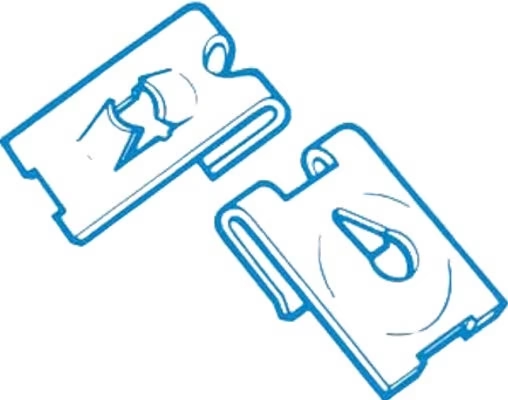
Advantages
PSM J Type Nuts though carrying the same advantages as U Nuts have a shorter lower arm, particularly useful where complete visibility of the mounting hole is required.
- All the benefits of the PSM ‘U’-Nuts +
- Complete visibility of mounting hole
- No ‘fouling’ of panel corners in restricted dimensions
- No welding, staking or riveting
- Self retaining and floating
- Self locking and vibration proof
- Quick and easy to apply
- Lightweight
- Non-paint clogging
Method of Assembly
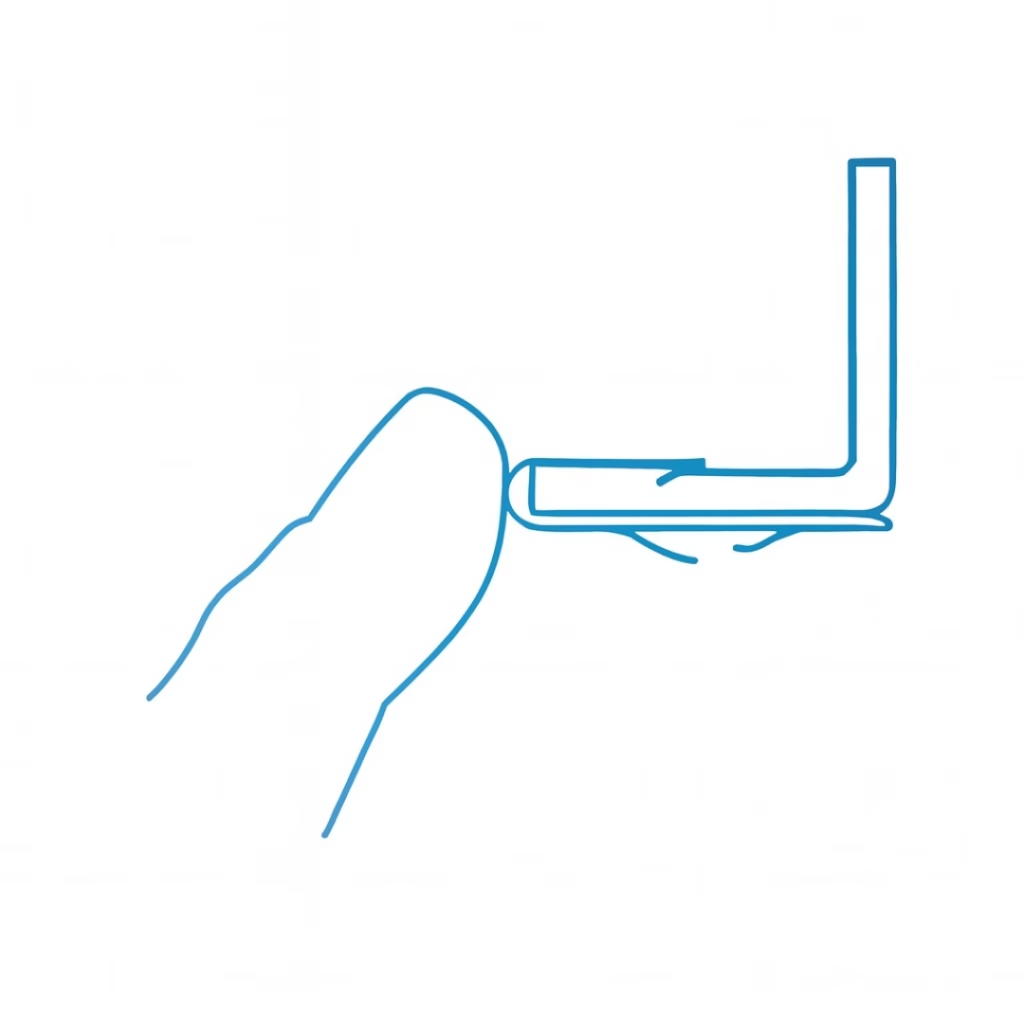
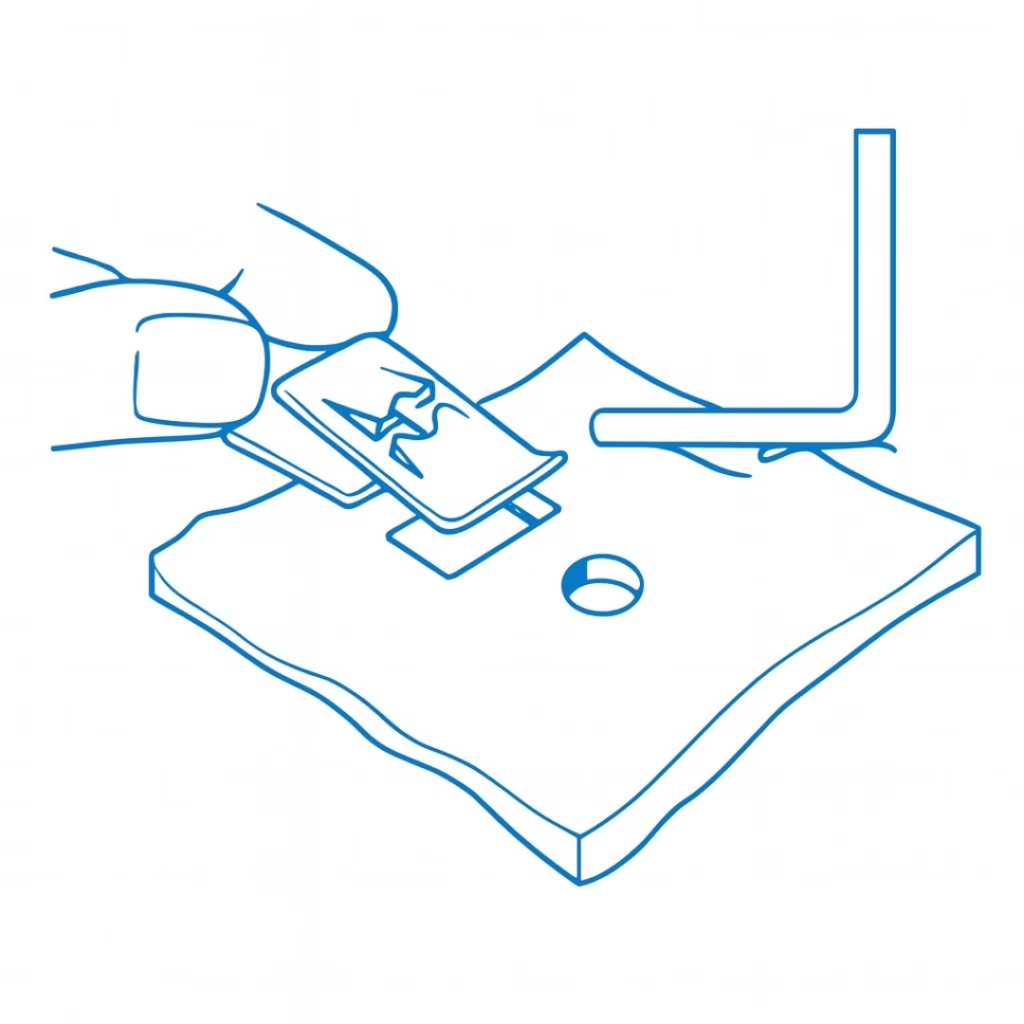
1. The PSM J Type Nut is installed in exactly the same manner as the ‘U’-Nut, except when as in Fig (a) the panel return shows the particular advantage of the J Type Nut.
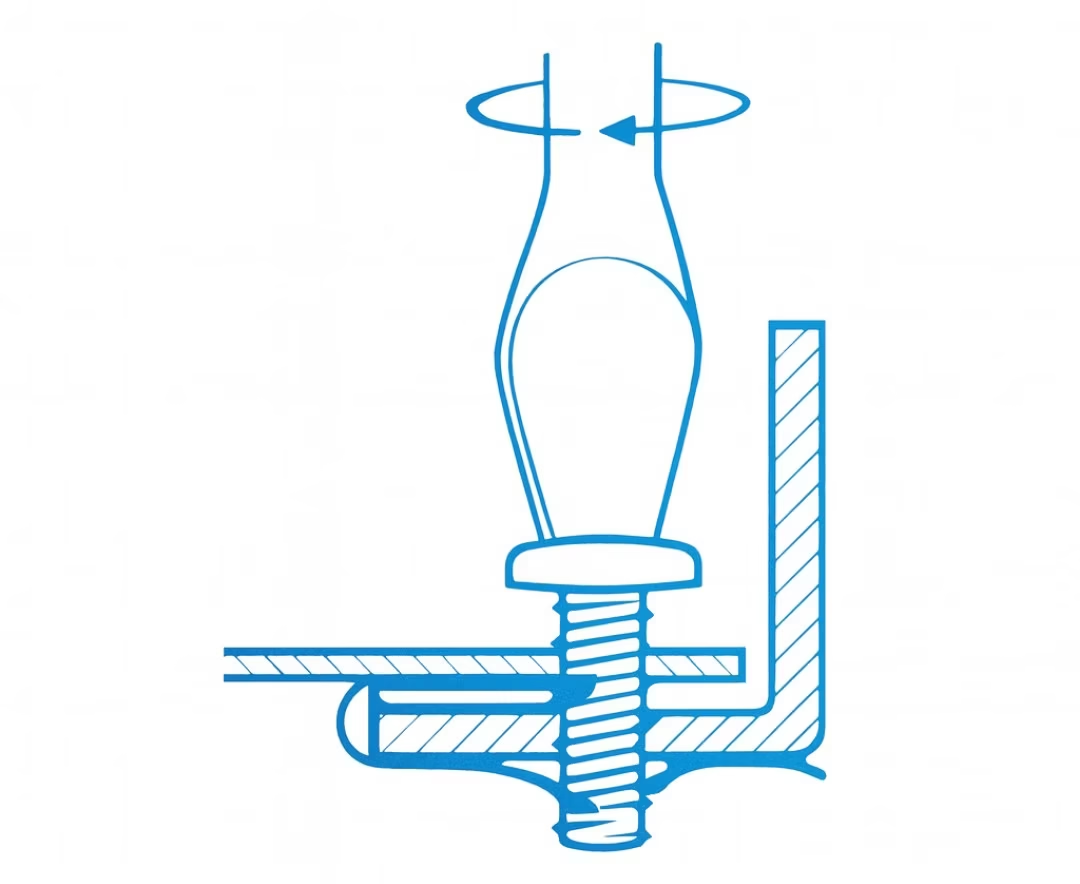
2. Insert screw through plain hole of fastener and tighten to recommended torque.
Technical Data

‘J’ Type Nuts – CBJN Series
MATERIAL
CS60, CS70 carbon steel, austempered or Type 300 series stainless steel
WHEN SPECIFYING, PLEASE STATE
- Quantity
- Prefix (CBJN)
- Part No.
- Finish code (e.g. 2000 CBJN-0316-13)
Dimensions
| Part No. | Screw Size | A | B | C | D | H | T | Panel Range |
|---|---|---|---|---|---|---|---|---|
| 0315 | 6 | 16.7 | 11.1 | 7.1 | 7.9 | 5.9 | 0.56 | 0.61 - 1.02 |
| 0314 | 6 | 16.7 | 11.1 | 7.1 | 7.9 | 5.9 | 0.56 | 1.22 - 1.62 |
| 0988 | 6 | 16.5 | 11.1 | 6.7 | 7.9 | 5.94 | 0.56 | 1.83 - 2.03 |
| 0316 | 8 | 16.7 | 11.1 | 7.1 | 7.9 | 7.1 | 0.61 | 0.71 - 1.22 |
| 0313 | 8 | 16.7 | 11.1 | 7.1 | 7.9 | 7.1 | 0.61 | 1.42 - 1.83 |
| 0341 | 10 | 15.9 | 17.5 | 7.1 | 7.1 | 8.0 | 0.71 | 0.81 - 1.0 |
| 0317 | 10 | 19.8 | 12.7 | 8.7 | 9.1 | 7.9 | 0.71 | 0.71 - 1.22 |
| 0343 | 10 | 19.8 | 12.7 | 8.7 | 9.1 | 7.9 | 0.71 | 1.42 - 2.03 |
| 0320 | 12 | 25.4 | 15.1 | 11.1 | 11.1 | 9.5 | 0.81 | 0.91 - 1.62 |
| 0347 | 12 | 25.4 | 15.1 | 11.1 | 11.1 | 9.5 | 0.81 | 1.83 - 2.64 |
| 0321* | 14 | 24.6 | 14.3 | 11.9 | 11.1 | 9.5 | 0.81 | 0.71 - 1.22 |
| 0346 | 14 | 26.2 | 15.9 | 12.7 | 10.3 | 9.9 | 0.91 | 0.81 - 0.91 |
| 0322 | 1/4 ACME | 17.7 | 19.0 | 8.0 | 7.6 | 8.74 | 0.91 | 0.91 |
| 0324 | 3/16 ACME | 19.8 | 12.7 | 8.7 | 9.1 | 7.9 | 0.56 | 0.71 - 1.22 |
| 0318 | 1/4 ACME | 26.2 | 15.9 | 12.7 | 10.3 | 9.9 | 0.91 | 0.91 - 1.62 |
| 0346 | 1/4 ACME | 26.2 | 15.9 | 12.7 | 10.3 | 9.9 | 0.91 | 0.81 - 0.91 |
*Denotes Helical Thread Impression
1/4 ACME is interchangeable with a No. 14AB Screw.
Series & Material
- Materials include spring steels such as CS60, CS70 (carbon steel) or austempered versions, and sometimes Type 300 stainless steel.
- The nut often carries a helical thread impression to assist locking behavior.
Dimensions & Coding
- When specifying a J-nut, include the quantity, prefix (CBJN), part number, and finish code (such as “2000 CBJN-0316-13”).
- The dimension table (thickness, width, return leg, thread size) must match mating parts.
- Helical thread impression is typically noted in drawings or specs.
- Some sizes may accept alternate thread types (e.g. ¼ ACME interchangeable with No. 14 AB screw).
Best Practices & Design Tips for J Type Nuts
- Use J-nuts when panel return is limited, or where full U-nut configuration would interfere with adjacent parts.
- Provide enough clearance for the nut’s shorter leg to engage without causing distortions.
- Use the floating tolerance built into J-nuts to accommodate minor misalignment between holes.
- Avoid painting over nut threads before assembly (even though the nut is non-paint clogging, heavy coatings can interfere).
- Test assemblies under vibration and torque cycles to ensure locking features maintain preload.
- For repeated serviceability, verify that the locking features (impressions, spring action) remain effective over multiple cycles.
Applications & Use Cases
J-type nuts are commonly used in electronics enclosures, plastic or metal panels, automotive trim, sheet assemblies, control boxes, and anywhere threaded access is needed but backside mounting hardware is impractical. Their compact design and self-locking behavior make them particularly suited for lightweight and vibration-prone assemblies.
Recommended Installation Torque
| Screw Size | lbs. ins | N.M. | Screw Size | lbs. ins | N.M. |
|---|---|---|---|---|---|
| 4 | 6 | 0.68 | 10 UNC | 11 | 1.24 |
| 6 | 12 | 1.35 | 10 UNF | 7 | 0.79 |
| 8 | 18 | 2.03 | 6 BA | 2 | 0.23 |
| 10 | 24 | 2.71 | 4 BA | 4 | 0.46 |
| 12 | 30 | 3.39 | 2 BA | 7 | 0.79 |
| 14 | 42 | 4.75 | 6 mm | 16 | 1.81 |
| 1/4 ACME | 50 | 5.65 | 4 mm | 6 | 0.69 |
| 5/16 ACME | 75 | 8.48 | 1/4 BSW | 20 | 2.26 |
| 2 BA | 7 | 0.79 | |||
| 3/16 BSW | 11 | 1.24 |
| Code | Description | Colour | Usage |
|---|---|---|---|
| 00 | Blue, oil dipped | Blue temper | Very light corrosive conditions |
| 09 | Phosphate, oil dipped | Dark grey | Light corrosive conditions |
| 13 | Chromate passivated electro plated zinc | Pale translucent yellow | Highly corrosive conditions |
| 08 | Phosphate & zinc chromate paint | Green | Highly corrosive conditions |
| 10 | Phosphate & zinc chromate paint | Black | Highly corrosive conditions |
| 11 | Plastic coating | Black | As required |
| 14 | Polyester | Various | As required |
| 22 | Polyseal | Black | Highly corrosive conditions |
| 24 | Dacromet | Silver | Highly corrosive conditions |
Enhance Your Assembly with Our Precision J Type Nuts
Start browsing our products or request a quote today to find the ideal fastening solution for your application.Frequently Asked Questions About J Type Nuts
What are J Type Nuts?
J Type Nuts (CBJN) clip onto sheet metal edges for tool-free, self-retaining assembly. The J-shaped spring-steel profile grips the panel edge under spring tension, holding a threaded section in place to accept a mating screw — without drilling, tapping, or welding the panel.