
Fast Global Shipping
Bulk Discounts
Over 10,000+ Product Variations
Trusted by 100,000+ Customers
Cage Nuts
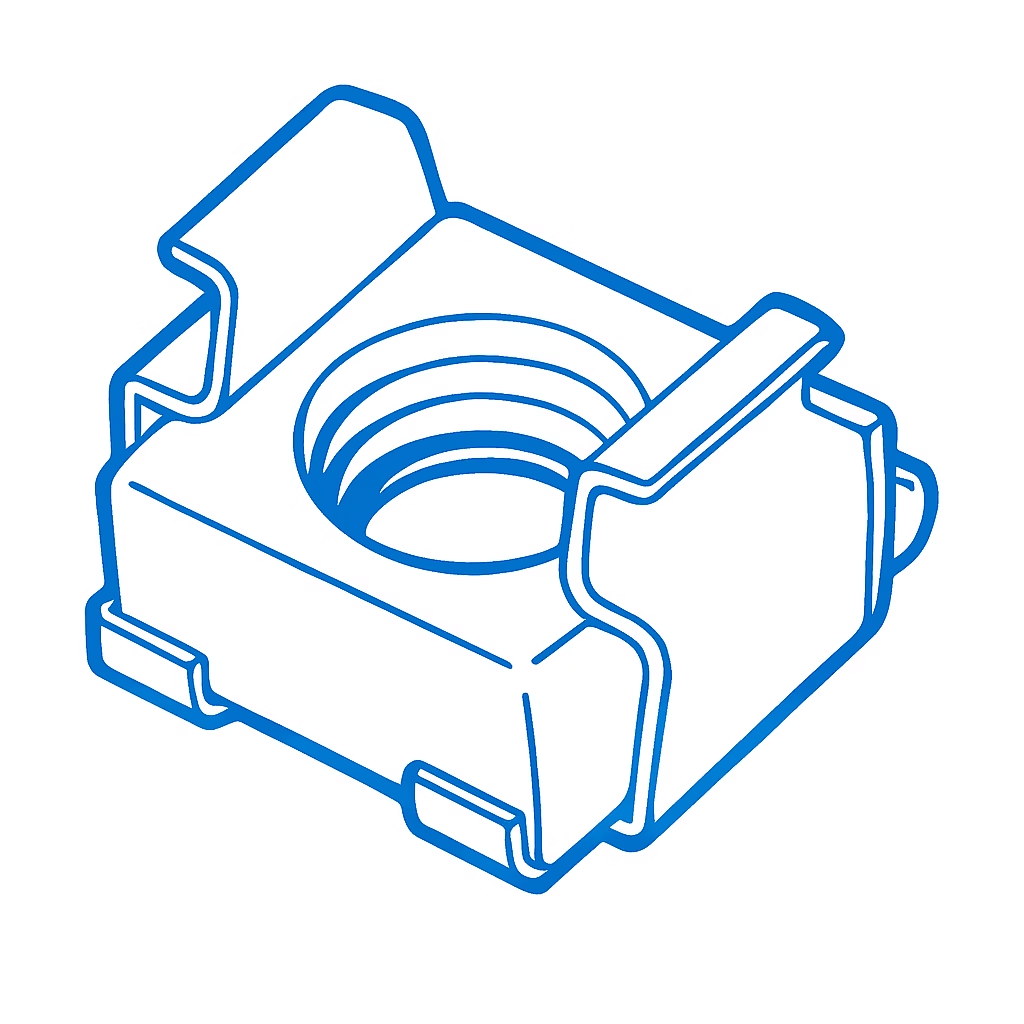
PSM Cage Nuts are spring steel fasteners that consist of a nut held within a spring steel cage or clip. They allow a captive nut to be clipped or snapped into a panel slot or aperture, so that a mating screw can engage securely. In assemblies combining plastic and metal—and especially where panels or enclosures use thin walls or hybrid constructions—cage nuts provide flexibility, serviceability, and alignment tolerance without needing to tap or weld.
Note: Design may vary from that illustrated, but efficiency and functional ability will not be affected.
Advantages
- Fast and easy to apply
- Self-retaining
- Blind fitting
- High strength
- Low cost
- Can be installed after painting or stoving, so no clean-up problems
Material
Cage – Carbon steel hardened, austempered
Nut – Low carbon mild steel
Finished Available
Code 00 -Blued, lanolin dipped
Code 13 -Electroplated, chromate passivated
When specifying, please state:
Simply quote part number and finish code required.
Example: CN-0147-00 denotes an M6 Cage Nut, lanolin dipped
Key Features
- The nut is held captive in a flexible spring cage that can clip into the panel, offering easy installation and removal
- The nut can “float” slightly laterally within the cage, compensating for misalignment between the screw and the panel hole
- Because the nut is separate, it can be replaced if damaged without replacing the entire cage or panel
- The spring steel cage ensures retention against vibration and shock
- Cage nuts are useful when the panel is too thin to be tapped, or where future servicing or adjustments are expected
Methods of Assembly
- Pierce hole in panel as per dimensions shown in data sheet below.
- Grip ears of cage nut together with pliers or similar tool and insert through panel. Release ears to enable expansion to locating hole side.
- After releasing ears cage nut is held firmly in locating hole by spring tension. Then simply screw bolt through panel into retaining nut.
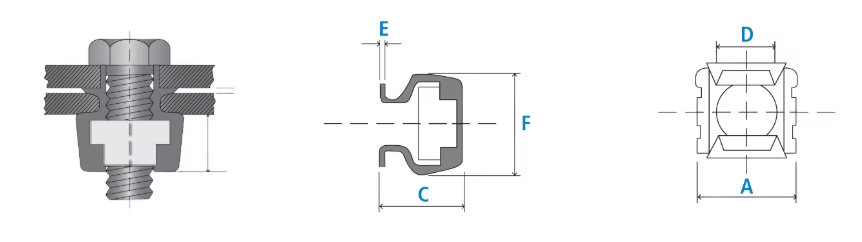
Dimensional Data & Sizes
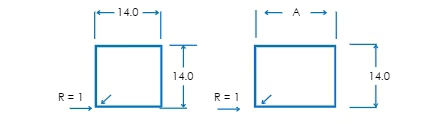
Hole Size 2
A = To customer requirements. R = Radius
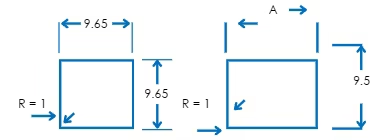
| Thread Size | Sheet Thickness | Part No. |
|---|---|---|
| M4 X 0.7 | 0.71 - 1.62 1.83 - 2.64 | CN-0126 CN-0127 |
| M5 X 0.8 | 0.71 - 1.62 1.83 - 2.64 | CN-0136 CN-0137 |
| 10 UNF | 0.71 - 1.62 1.83 - 2.64 | CN-0134 CN-0135 |
| 10 UNC | 0.71 - 1.62 1.83 - 2.64 | CN-0148 CN-0149 |
| M6 X 1.0 | 0.71 - 1.62 1.83 - 2.64 | CN-0146 CN-0147 |
| 1/4" UNC | 0.71 - 1.62 1.83 - 2.64 | CN-0140 CN-0141 |
| 1/4" UNF | 0.71 - 1.62 1.83 - 2.64 | CN-0138 CN-0139 |
Hole Size 3
A = To customer requirements. R = Radius
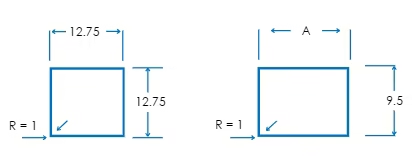
| Thread Size | Sheet Thickness | Part No. |
|---|---|---|
| 1/4" UNC | 0.71 - 2.34 2.36 - 4.1 | CN-3001 CN-3002 |
| 5/16" UNC | 0.71 - 2.34 2.36 - 4.1 | CN-3003 CN-3004 |
| 3/8" UNC | 0.71 - 2.34 2.36 - 4.1 | CN-3005 CN-3006 |
| M8 X 1.25 | 0.71 - 2.34 2.36 - 4.1 | CN-3184 CN-3185 |
| M10 X 1.5 | 0.71 - 2.34 2.36 - 4.1 | CN-3186 CN-3187 |
Hole Size 4
A = To customer requirements. R = Radius
| Thread Size | Sheet Thickness | Part No. |
|---|---|---|
| 1/4" UNC | 1.45 - 2.34 2.34 - 4.31 4.57 - 6.1 | CN-4001 CN-4002 CN-4003 |
| 3/8" UNC | 1.45 - 2.34 2.34 - 4.31 4.57 - 6.1 | CN-4004 CN-4005 CN-4006 |
| 7/16" UNC | 1.45 - 2.34 2.34 - 4.31 4.57 - 6.1 | CN-4007 CN-4008 CN-4009 |
| 1/2" UNC | 1.45 - 2.34 2.34 - 4.31 4.57 - 6.1 | CN-4010 CN-4011 CN-4012 |
| M12 X 1.75 | 1.45 - 2.34 2.34 - 4.31 4.57 - 6.1 | CN-4013 CN-4014 CN-4015 |
Imperial and other thread sizes available on request – subject to minimum order quantity.
Recommended Installation Torque
| SCREW SIZE | lbs. ins | N.M. | SCREW SIZE | lbs. ins | N.M. |
|---|---|---|---|---|---|
| 4 | 6 | 0.68 | 10 UNC | 11 | 1.24 |
| 6 | 12 | 1.35 | 10 UNF | 7 | 0.79 |
| 8 | 18 | 2.03 | 6 BA | 2 | 0.23 |
| 10 | 24 | 2.71 | 4 BA | 4 | 0.46 |
| 12 | 30 | 3.39 | 2 BA | 7 | 0.79 |
| 14 | 42 | 4.75 | 6 mm | 16 | 1.81 |
| 1/4 ACME | 50 | 5.65 | 4 mm | 6 | 0.69 |
| 5/16 ACME | 75 | 8.48 | 1/4 BSW | 20 | 2.26 |
| 2 BA | 7 | 0.79 | |||
| 3/16 BSW | 11 | 1.24 |
| CODE | DESCRIPTION | COLOUR | USAGE |
|---|---|---|---|
| 00 | Blue, oil dipped | Blue temper | Very light corrosive conditions |
| 09 | Phosphate, oil dipped | Dark grey | Light corrosive conditions |
| 13 | Chromate passivated electro plated zinc | Pale translucent yellow | Highly corrosive conditions |
| 08 | Phosphate & zinc chromate paint | Green | Highly corrosive conditions |
| 10 | Phosphate & zinc chromate paint | Black | Highly corrosive conditions |
| 11 | Plastic coating | Black | As required |
| 14 | Polyester | Various | As required |
| 22 | Polyseal | Black | Highly corrosive conditions |
| 24 | Dacromet | Silver | Highly corrosive conditions |
Enhance Your Assembly with Our Precision Cage Nuts
Start browsing our products or request a quote today to find the ideal fastening solution for your application.