
Fast Global Shipping
Bulk Discounts
Over 10,000+ Product Variations
Trusted by 100,000+ Customers
Special Components
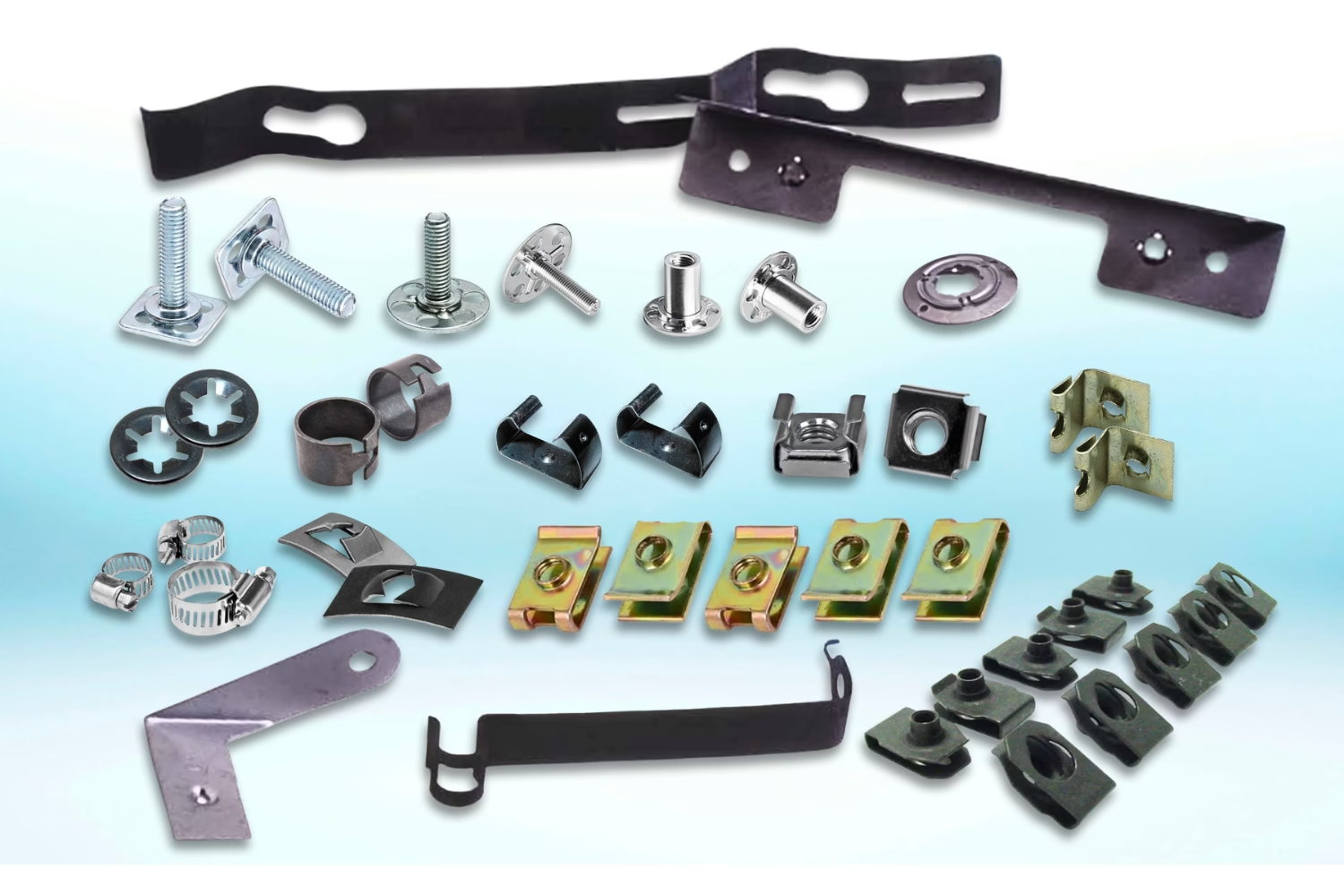
Whatever the project, PSM will custom design and manufacture special parts, whether they are spring steel pressings or lightweight molded plastic products to suit – giving designers of complex parts all the flexibility they could want.
Wherever manufactured goods are made, PSM has local people on hand to provide technical support, advice and application engineering, project management and customer service.
That’s the reassurance you get from working with a global organisation dedicated to improving your competitive edge – whether you’re using spring steel or any of PSM’s family of fastening solutions.
Design & Specification Considerations
Material Selection & Compatibility
- Choose spring steel grades that give the needed elasticity and fatigue life
- For parts contacting plastic, consider coatings or finishes that reduce wear and friction
- Use materials compatible with the environment (corrosion, temperature, chemicals)
Mechanical & Load Requirements
- Define the required retention force, torque range, fatigue cycles, vibration resistance
- Determine whether the special part needs to combine multiple functions (e.g. latch + clip)
- If used in plastic parts, determine allowable wall thickness, stress, and how loads transmit
Tolerance, Alignment & Fit
- Provide tight tolerances where the special part interfaces with mating components
- If float or misalignment is part of the design, specify allowable play and deflection
- Consider how mating parts, clearances, and interference affect assembly robustness
Prototyping & Testing
- Before full production, prototype special parts to validate performance under real conditions
- Test for retention, torque, fatigue, thermal cycling, and wear
- Adjust features (geometry, material, finish) based on test outcomes
Manufacturing & Installation Guidelines
- Use appropriate tooling to maintain precision and avoid deforming spring steel elements
- If the special part is to be installed in plastic or sheet components, the insertion method (press, clip, thermal, etc.) must match the part’s features
- Assembly force must be controlled; avoid shock or misalignment during installation
- If the special part interacts with moving parts, ensure tolerances and clearances are sufficient to avoid interference or wear
Recommended Installation Torque


Enhance Your Assembly with Our Precision Special Parts
Start browsing our products or request a quote today to find the ideal fastening solution for your application.Frequently Asked Questions About Special Components
What are special components in the context of spring steel and plastic fasteners?
Special Components are custom-designed and manufactured fasteners, clips, retainers, and specialty fixings that fall outside standard catalogue ranges. PSM International designs and manufactures special components as either spring steel pressings or lightweight moulded plastic parts — or a combination of both — to meet exact performance, geometry, and assembly requirements that standard off-the-shelf fasteners cannot fulfil. They are used across automotive, appliance, industrial, and electronics assemblies wherever a unique fastening solution is needed.
Can PSM International design and manufacture custom special components?
What types of special components can PSM manufacture?
PSM’s special components capability covers a broad range, including:
- Custom spring steel pressings — clips, brackets, retaining springs, latches, and formed fixings in custom geometries
- Custom moulded plastic fasteners — lightweight plastic clips, retainers, and housings tailored to specific panel designs
- Hybrid spring steel and plastic components — combining the strength and spring force of steel with the weight and surface benefits of plastic
- Multi-function special parts — components that integrate two or more fastening functions (e.g., latch and clip combined) into a single part, reducing assembly count
What industries use PSM's special components?
What material selection considerations apply to special components?
When specifying special components, the following material considerations are key:
- Spring steel grade — select grades that deliver the required elasticity, fatigue life, and retention force for the intended load and cycle requirements
- Finish and coating — for parts in contact with plastic, choose finishes or coatings that minimise wear and friction at the interface; for corrosive or high-humidity environments, specify appropriate corrosion-resistant treatments (zinc plating, passivation, lanolin dip)
- Material compatibility — ensure the chosen material and finish are compatible with the chemical, thermal, and mechanical environment the part will operate in
- Plastic material selection — for moulded plastic special parts, consider the operating temperature range, UV exposure, chemical resistance, and structural requirements of the target plastic grade