Wrong fastener material selection can lead to costly corrosion failures, production delays, and product recalls. Learn the 8 critical factors engineers consider when choosing fastener materials for corrosive environments, high-temperature applications, and challenging assemblies.
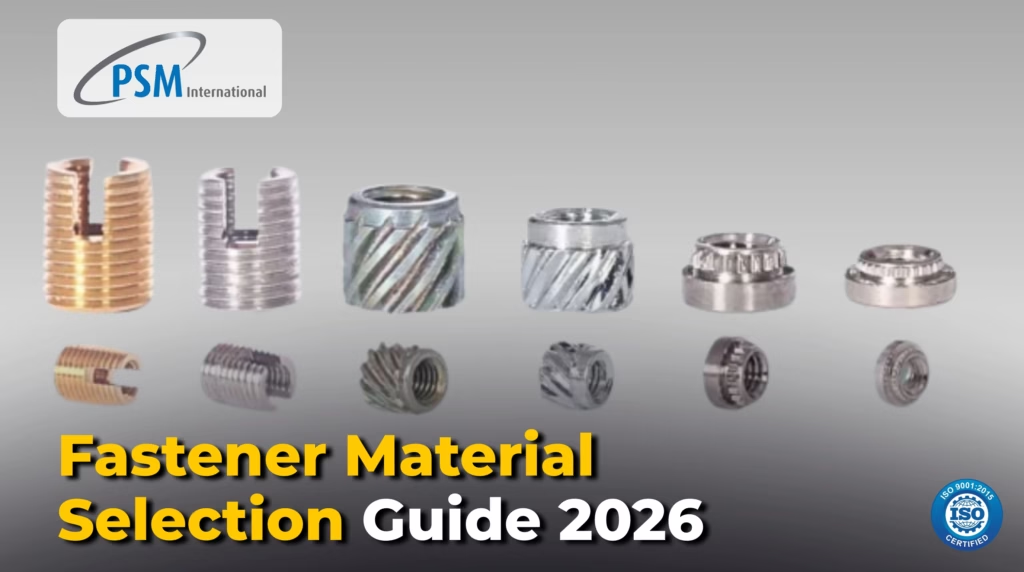
Choosing the wrong fastener material creates a cascade of problems: corroded assemblies that won’t disassemble during maintenance, production line shutdowns, warranty claims, and product recalls. With hundreds of fastener materials available, how do you select the right one for your specific application?
The answer lies in understanding eight critical factors that determine fastener material performance. Whether you’re designing automotive components, medical devices, or industrial equipment, proper fastener material selection directly impacts assembly reliability, maintenance costs, and product longevity.
🔧 Experiencing Corrosion or Material Compatibility Issues?
Our fastening specialists provide free technical consultations to help you select the optimal fastener material for your specific application and environment. No obligation, just expert guidance.
Get Free Technical Consultation →Understanding Material Compatibility in Fastener Applications
The most common fastener failure mode isn’t mechanical overload—it’s corrosion-related degradation. Engineers who prioritize initial cost savings by selecting plated mild steel fasteners often face significantly higher expenses when those fasteners corrode and prevent disassembly during routine maintenance.
The True Cost of Corrosion in Fastener Assemblies
When a corroded fastener seizes in place, costs extend beyond replacement parts. Production lines stop. Maintenance crews spend hours attempting removal. In worst cases, the entire assembly becomes scrap because the fastener cannot be removed without damaging surrounding components.
Consider this scenario: A facility chose zinc-plated steel fasteners to save $2,000 on an initial production run. Two years later, severe corrosion prevented fastener removal. The resulting downtime, emergency repairs, and component replacement cost $47,000. This happens repeatedly because material compatibility isn’t properly understood during design.
Galvanic Corrosion: The Silent Assembly Destroyer
Galvanic corrosion occurs when dissimilar metals contact each other in the presence of an electrolyte—even humid air or rainwater. This creates a battery effect where current flows between metals, accelerating corrosion of the more anodic (less noble) material.
The critical insight: the fastener should always be more corrosion-resistant than the base material. Why? Because the fastener is the key to joint integrity. Corrosion affecting the base material may be tolerable, but a corroded fastener compromises the entire assembly’s structural integrity.
Stainless steel thread forming screws for plastics demonstrate this principle. When fastening plastic components outdoors or in humid environments, stainless steel provides inherent corrosion resistance that eliminates rust staining or degradation.
Metal Fastener Materials: Corrosion Resistance and Strength Considerations
Metal fasteners dominate industrial applications due to superior strength, temperature resistance, and mechanical properties. However, selecting the wrong metal for your environment creates reliability problems that compound over time.
Stainless Steel vs. Plated Fasteners
Mild steel fasteners with zinc or galvanized coatings represent the traditional low-cost option. These perform adequately indoors with controlled humidity. However, the coating is consumable. Once it wears through from assembly friction or environmental exposure, the underlying steel corrodes rapidly.
Stainless steel fasteners cost more initially but provide inherent corrosion resistance throughout the material’s entire cross-section. No coating to wear through. For outdoor applications, marine environments, or chemical exposure, stainless steel represents inexpensive insurance against field failures.
The cost differential appears more significant than it is. Upgrading from zinc-plated to stainless steel typically increases finished product price by less than 0.5%. That minimal increase eliminates corrosion risk while improving perceived quality.
Brass and Bronze for Specialized Applications
Brass fasteners excel where electrical conductivity is required or stainless steel might cause galvanic concerns. FIN-LOK brass inserts provide excellent corrosion resistance in plastic assemblies while offering superior electrical conductivity compared to stainless steel.
Bronze fasteners offer even greater corrosion resistance in marine and harsh chemical environments. However, bronze’s lower strength means engineers must carefully evaluate load requirements for structural applications.
Understanding Material Pairing
When different metals contact each other, their position in the galvanic series determines which material experiences accelerated corrosion. Materials closer together create less galvanic potential and less corrosion risk.
Key pairings to avoid: aluminum base materials with steel fasteners in wet environments cause rapid aluminum corrosion. Steel base materials with stainless steel fasteners generally perform well. Zinc-plated fasteners with aluminum work temporarily, but zinc coating consumption accelerates.
💰 Stop Wasting Money on Corrosion-Related Failures
Prevent costly production downtime and warranty claims by selecting corrosion-resistant fastener materials from the start. Get transparent pricing on stainless steel, brass, and specialized alloy fasteners.
Request a Quote →Plastic Fastener Materials: When to Choose Non-Metallic Solutions
Plastic fasteners solve specific engineering challenges where metal creates problems: electrical insulation requirements, weight reduction mandates, chemical exposure concerns, or situations where metal would cause galvanic corrosion.
Nylon: The Versatile Lightweight Alternative
Nylon offers the best overall balance for general-purpose plastic fastener applications. With good mechanical strength, impact resistance, and temperature stability to approximately 85°C, nylon works well in automotive interiors, consumer electronics, and light industrial equipment.
Primary limitations include poor UV resistance, limited chemical resistance to acids and strong alkalines, and relatively low heat resistance. For outdoor or chemically aggressive environments, consider alternative plastics with better environmental resistance.
PVDF: Chemical and Electrical Applications
Polyvinylidene fluoride (PVDF) fasteners excel in electrical cabinets and chemically aggressive environments. With excellent resistance to acids, alkalines, and most solvents, PVDF maintains mechanical properties where nylon would rapidly degrade.
PVDF’s temperature stability, heat resistance, and flame resistance make it ideal for electrical applications where safety standards prohibit materials that contribute to fire propagation. Ultrasonic installation inserts manufactured from brass install into PVDF housings without thermal degradation, creating strong threaded connections in chemically resistant assemblies.
PEEK for Extreme Environments
Polyetheretherketone (PEEK) represents the premium plastic fastener option. With continuous operating temperatures to 180°C, excellent chemical resistance, high tensile strength, and good flame resistance, PEEK serves oil and gas, aerospace, and high-temperature industrial applications.
Material cost for PEEK exceeds other engineering plastics significantly, but for sustained high-temperature performance combined with mechanical strength, PEEK often represents the only viable plastic option. Heat installation inserts work exceptionally well with PEEK materials, creating strong metal threads in high-performance plastic assemblies.
Installation Method Impact on Fastener Material Selection
Installation method directly influences which fastener materials perform optimally. Heat installation, ultrasonic installation, and cold press-fit each impose different thermal and mechanical stresses.
Heat Installation Considerations
Heat installation requires fasteners that withstand insertion temperatures of 200-350°C without degradation. Brass inserts handle these temperatures while providing excellent thermal conductivity for rapid heat transfer during installation.
Base material must also tolerate these temperatures. Thermoplastics like polypropylene, nylon, and polycarbonate work well with heat installation, while thermosetting plastics require alternative methods to prevent thermal damage.
Ultrasonic Installation Requirements
Ultrasonic installation generates localized heating through high-frequency vibration, melting plastic around the insert while leaving surrounding material unaffected. SONIC-LOK inserts for softer plastics feature knurled or grooved external surfaces that create optimal mechanical bonding with melted plastic.
This method works best with thermoplastics having well-defined melting points. Amorphous plastics and thermosetting materials generally don’t respond well because they don’t melt and reflow like crystalline thermoplastics.
Cold Press-Fit Advantages
PRESS-LOK brass inserts eliminate thermal stress entirely by using mechanical interference and undercut features. This cold installation works with virtually any plastic material, including thermosetting plastics, filled composites, and thermally sensitive materials that can’t tolerate heat or ultrasonic installation.
The trade-off involves higher installation forces and accurately molded or drilled holes to ensure proper press-fit interference. However, for maximum material compatibility or where thermal installation would degrade material properties, press-fit offers an excellent solution.
Industry-Specific Material Requirements
Different industries impose specific requirements based on regulatory standards, environmental conditions, and performance expectations.
Automotive and Manufacturing
Automotive fasteners must withstand vibration, temperature cycling, and exposure to oils, fuels, and road salt. Stainless steel fasteners with mechanical locking features prevent loosening in high-vibration environments. For non-structural applications, lightweight nylon fasteners reduce vehicle weight while providing adequate strength for interior trim and electrical components.
Pharmaceutical and Medical Devices
Pharmaceutical equipment and medical devices demand materials that won’t contaminate products or patients. Stainless steel grades 304 and 316 provide corrosion resistance and cleanability required for pharmaceutical manufacturing. These withstand repeated cleaning with aggressive sanitizers without degrading.
Medical device assemblies often specify polypropylene (PP) fasteners for excellent chemical resistance and sterilization compatibility. PP’s resistance to chemicals combined with autoclave capability makes it ideal for reusable medical instruments.
Oil and Gas Extreme Environments
Oil and gas applications expose fasteners to extreme temperatures, high pressures, corrosive chemicals, and continuous vibration. PEEK fasteners operate continuously at temperatures to 180°C while resisting crude oil, natural gas, drilling fluids, and harsh chemicals.
For structural applications requiring metal, exotic alloys like Inconel, Hastelloy, or duplex stainless steels provide necessary corrosion resistance and mechanical properties for subsea equipment, refinery piping, and offshore platforms.
⭐ ISO 9001:2015 Certified Quality You Can Trust
PSM Fasteners provides 85+ years of fastening expertise with certified quality management and custom engineering support. Work with Australia’s trusted fastener specialists.
Start Your Project Today →What PSM Fasteners Does Differently in Material Selection Support
Selecting optimal fastener materials requires more than comparing property charts. It demands understanding complete application context: assembly method, environmental exposure, regulatory requirements, maintenance considerations, and cost constraints.
ISO 9001:2015 Certified Quality Management
PSM Fasteners maintains ISO 9001:2015 certification, ensuring every fastener meets documented quality standards through verified manufacturing processes. Material specifications are rigorously controlled, providing consistent performance batch after batch.
For engineers in regulated industries like medical devices or automotive manufacturing, ISO certification provides documented quality assurance required to meet compliance mandates.
Custom Engineering and Application Support
Not every fastening challenge fits standard catalog products. PSM Fasteners offers custom manufactured fastener solutions engineered specifically for unique material requirements, dimensional constraints, or performance specifications.
This custom capability means engineers can specify exactly the right material without compromising design requirements. Whether you need specialized alloys, unique coatings, or non-standard dimensions, custom manufacturing ensures optimal fastener material selection without forcing design compromises.
Material Selection Summary
Fastener material selection determines whether your assembly performs reliably throughout its intended lifecycle or fails prematurely due to corrosion, material incompatibility, or environmental degradation. The eight critical factors—corrosion resistance, galvanic compatibility, strength requirements, temperature stability, chemical resistance, installation method, industry standards, and environmental considerations—provide a systematic evaluation framework.
The cost difference between adequate and optimal fastener materials rarely exceeds 1% of total product cost. However, that small investment prevents field failures, warranty claims, production delays, and costly maintenance interventions that can cost hundreds or thousands of times the initial fastener savings.
Ready to select the right fastener material for your application? Explore our fastener product range or contact PSM Fasteners at +61 2 9026 8383 (7:30am – 4:30pm Mon-Fri AEST) for expert guidance on material selection, custom solutions, and technical specifications.
Frequently Asked Questions About Fastener Material Selection
How do I prevent galvanic corrosion between dissimilar metals?
Select fastener materials more noble (corrosion-resistant) than the base material, or use isolation methods like non-conductive washers or coatings. Stainless steel fasteners generally perform well with aluminum, steel, and brass base materials when properly designed.
What’s the difference between stainless steel grades for fasteners?
Grade 304 stainless provides excellent general-purpose corrosion resistance for most indoor and outdoor applications. Grade 316 stainless offers superior resistance to chlorides and marine environments. For specific applications, consult material compatibility charts or contact fastening specialists.
Can I use plastic fasteners for structural applications?
PEEK and high-performance nylon grades offer significant strength suitable for semi-structural applications. However, metal fasteners generally provide superior strength, stiffness, and creep resistance for primary structural connections. Evaluate load requirements carefully when considering plastic fasteners.
How do installation methods affect fastener material choices?
Heat installation requires materials withstanding 200-350°C without degradation. Ultrasonic installation works best with thermoplastics having defined melting points. Press-fit installation accommodates virtually any material but requires specific dimensional tolerances and hole preparation.
What material should I choose for high-temperature applications?
For metal fasteners, stainless steel maintains strength to approximately 400°C, while exotic alloys like Inconel serve even higher temperatures. For plastic fasteners, PEEK operates continuously to 180°C, while standard nylon and polypropylene limit around 85-100°C maximum.