
Fast Global Shipping
Bulk Discounts
Over 10,000+ Product Variations
Trusted by 100,000+ Customers
Direct Screw Fixings
Direct screw fixings are self-forming or self-tapping screws designed to be driven directly into plastic or light alloy substrates without pre-installed inserts. We describe them as a fast, economical, production line solution when reuse and extremely high torque retention are not primary concerns. These screws are engineered to optimize the balance between installation torque and stripping torque (i.e. safe torque margin).
PRODUCT INDEX
PT® SERIES
WN14

Designed for use in thermoplastics, its key design features include a profiled thread root to assist plastic flow, a 30° flank angle to reduce boss bursting forces and an 8° pitch angle.
DURO-PT® SERIES
WN17
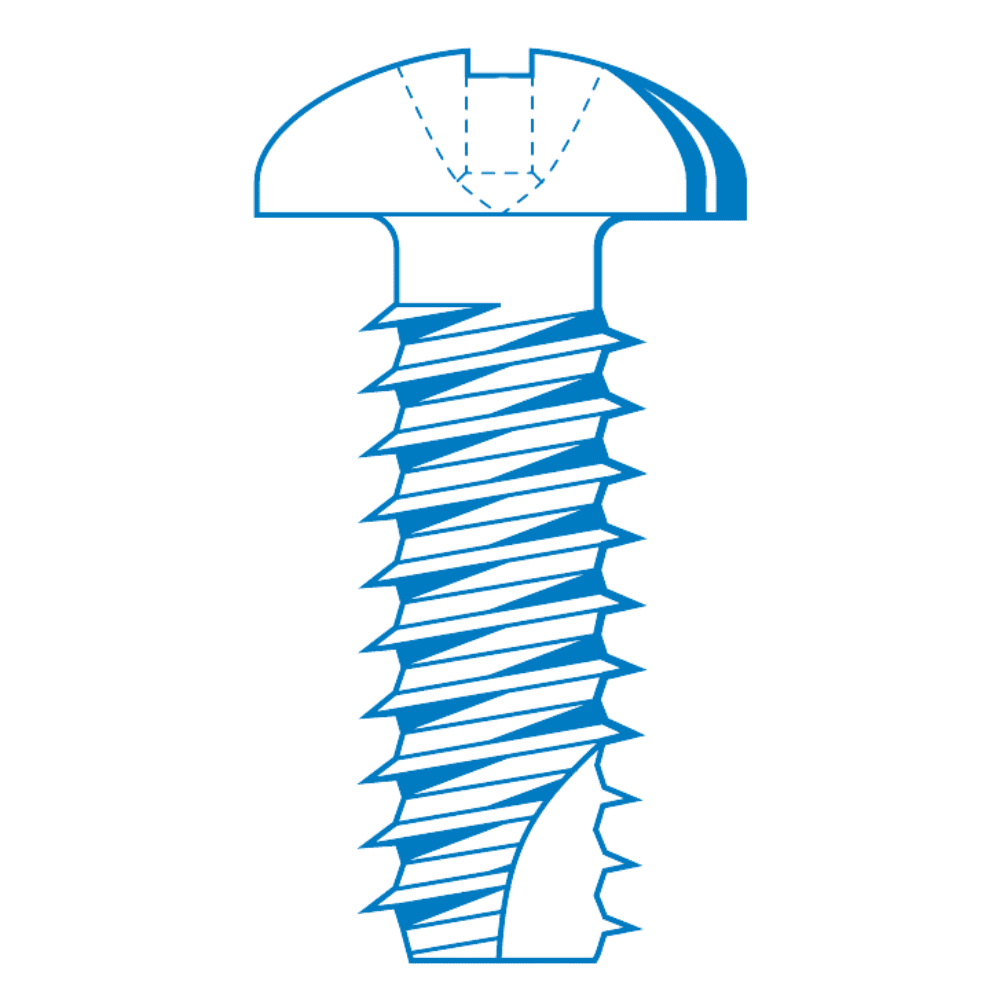
The cutting notch combined with the profiled thread root gives low installation torques whilst the special thread form provides high stripping torques when used in thermosetting materials.
PT® TYPE DG
WN15
Developed to provide an effective screw fixing in light alloy materials with low installation torque and high stripping torque.
Direct Screw Fixings Design Principles & Benefits
Optimized Thread Forms
PSM’s PT® series uses a profiled thread root to help plastic flow, a 30° flank angle (to reduce bursting forces on bosses), and an 8° pitch angle. These shapes are intended to maximize the margin between installation and stripping torque.
Reusability & Vibration Resistance
Unlike many basic self-tapping screws, these are claimed to support more than 10 reuses in thermoplastic materials. We also offer greater resistance to vibration thanks to the tailored thread geometries.
Variants for Different Materials
PSM offers variants tailored to substrate type:
| Series / Variant | Target Substrate | Design Feature |
|---|---|---|
| PT® Series | Thermoplastics | Profiled root, standard forming threads |
| Duro-PT® Series | Thermosets / harder plastics | Cutting notch + profiled root to lower installation torque yet maintain stripping torque |
| PT® Type DG | Light alloys | Engineered for low installation torque in alloys, yet high stripping torque |
When to Use Direct Screw Fixings
Good use cases:
- Production environments needing quick assembly without inserts
- Plastic or light alloy parts where disassembly/reuse is occasional
- Applications where moderate torque is sufficient (i.e. not extremely high loads)
Limitations/caveats:
- Not ideal if very high torque or repeated reuse is required
- Boss strength, wall thickness, and material type must be carefully considered
- The margin between installation torque and stripping torque can shrink if parameters stray (e.g. misalignment, over-tightening)
Best Practices & Recommendations
- Choose the correct series (forming vs cutting vs alloy type) depending on substrate.
- Design adequate boss geometry (wall thickness, diameter, rib support) to handle screw stresses.
- Control installation torque precisely (e.g. torque drivers, controlled feed).
- Test stripping and reusability under expected operating conditions (temperature, vibration).
- Consult engineering support. PSM offers pre-production testing via our Technology Centre.
Enhance Your Assembly with Our Precision Direct Screw Fixings
Start browsing our products or request a quote today to find the ideal fastening solution for your application.
Frequently Asked Questions About Direct Screw Fixings
What are direct screw fixings for plastics and light alloys?
How do direct screw fixings work in plastic?
Can direct screw fixings be used in aluminium and zinc die-cast?
What is the difference between PSM's three direct screw fixing series?
What boss hole size should I use for direct screw fixings?
The correct boss hole diameter is critical to performance. Too small and the screw generates excessive radial stress, risking boss cracking. Too large and pull-out and stripping torque are reduced. PSM’s design guides for each series (PT/WN14, Duro-PT/WN17, PT Type DG/WN15) provide specific recommended hole diameters for each screw size and host material type. Always measure at the mid-penetration point.