
Fast Global Shipping
Bulk Discounts
Over 10,000+ Product Variations
Trusted by 100,000+ Customers
PFH Self-Clinching Stud
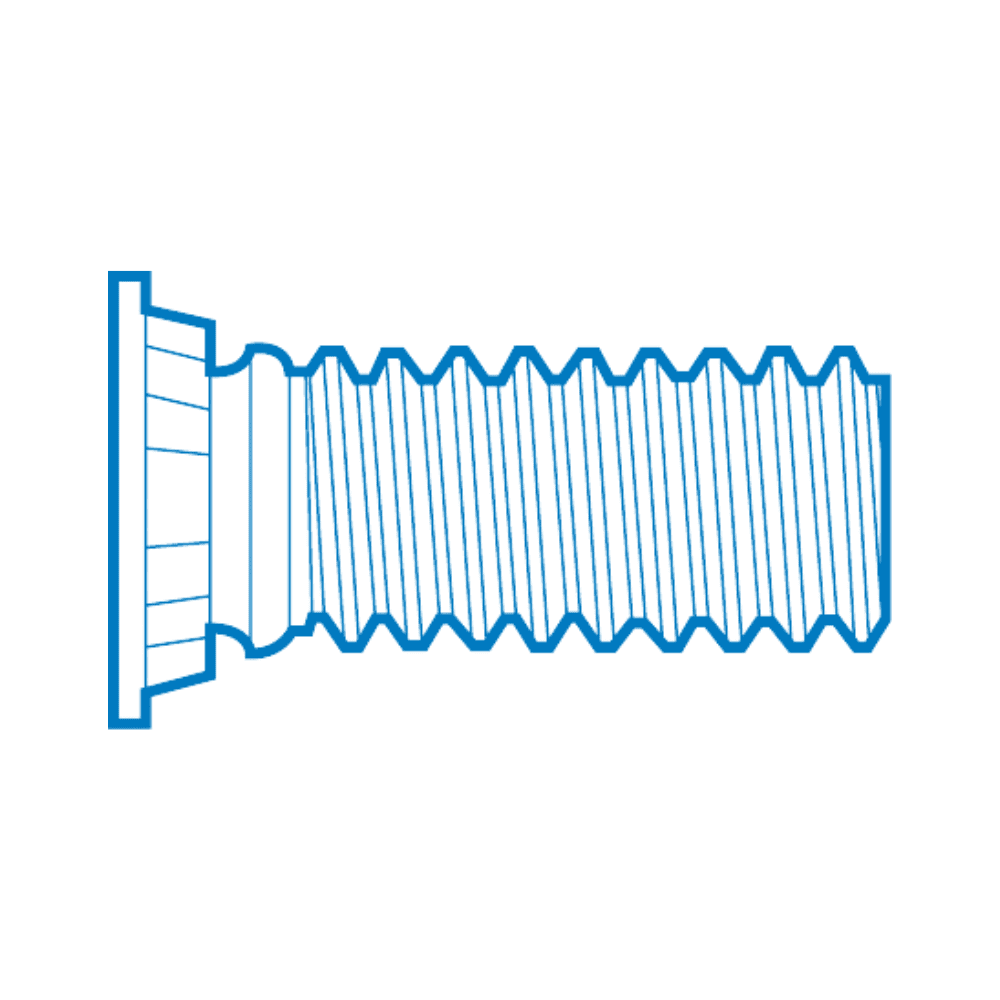
The PSM PFHS/PFH SELF-CLINCHING STUD is a threaded fastener which incorporates a knurled platform under the head, which when embedded in the sheet, displaces material into the clinch ring securing the fastener firmly in place.
Advantages
- Easy to assemble with any squeeze press
- High torque resistance
- No damage to decorative finishes on panels
- Visual proof of security
- Always perpendicular to panel
- Head installs flush with surface of sheet
PFH Self-Clinching Stud Design Guide
Hole Preparation
It is recommended that the holes are formed using a punch operation, although drilled holes may be used. Holes should not be countersunk or de-burred.
Hole Size
Holes must be held to a tolerance of -0.00mm + 0.08mm (-.000” +.003”).
Minimum Sheet Thickness
See product data sheets and method of assembly.
Maximum Sheet Hardness
Rb80 for Steel Studs (P-FH)
Rb70 for Stainless Steel Studs (P-FHS)
Installation
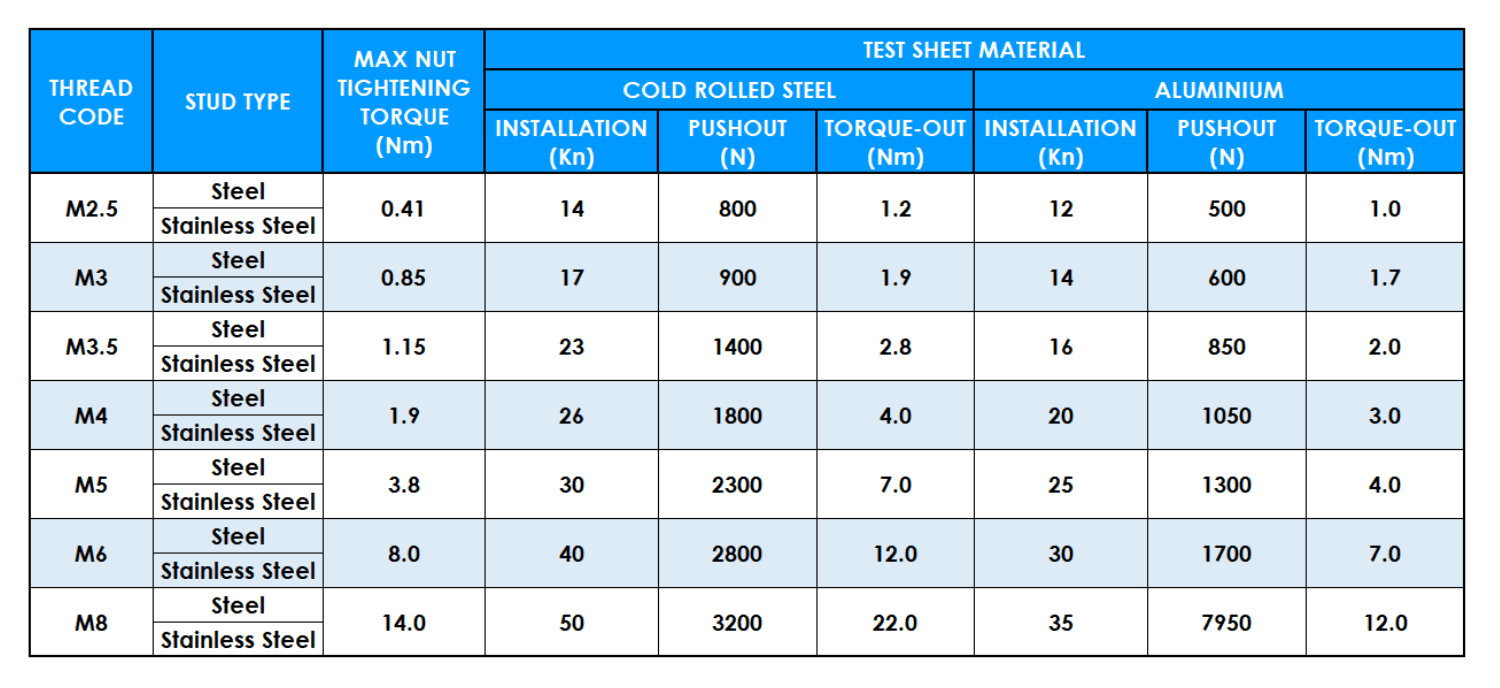
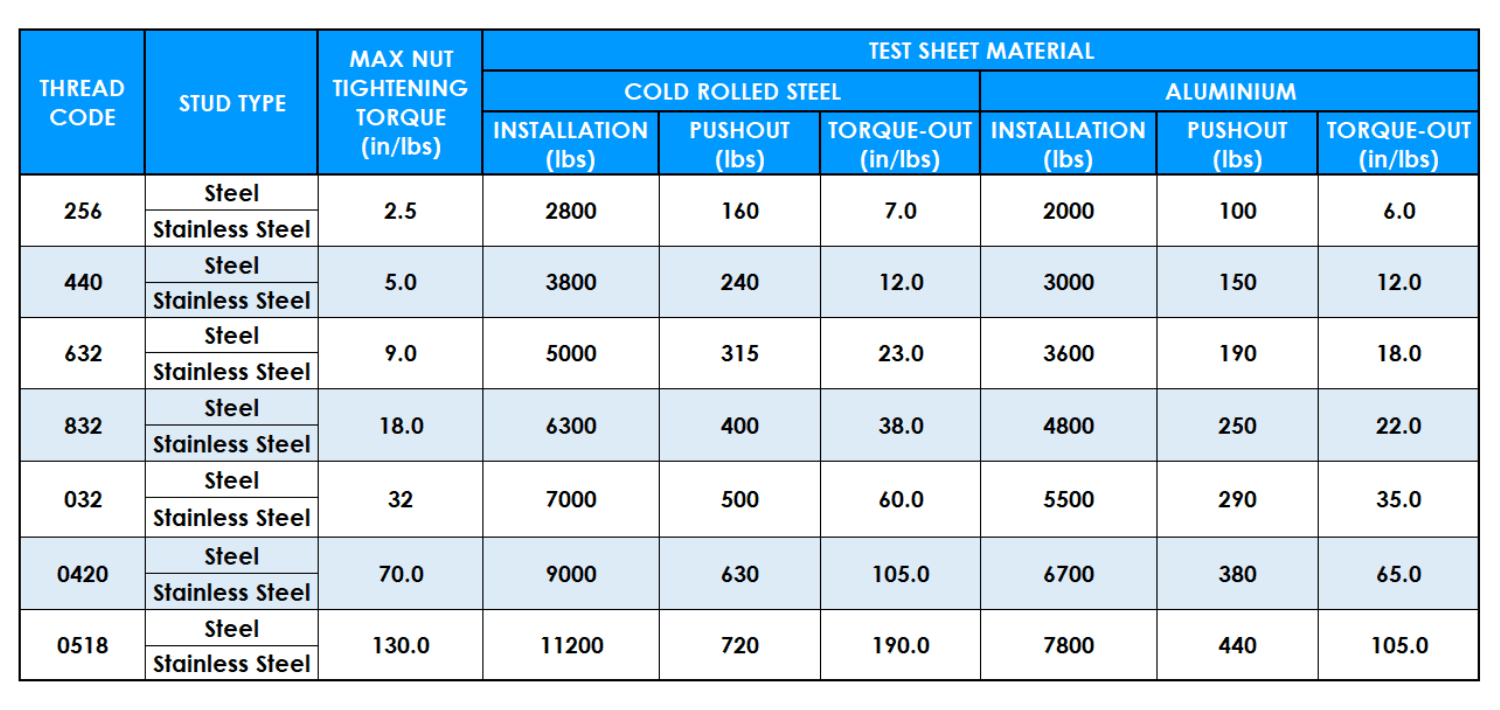
Apply squeezing pressure sufficient only to embed the head of the stud flush with surface of the sheet. Avoid excessive pressures. Installation forces vary with sheet hardness and thickness. See PERFORMANCE DATA for recommended forces.
Tooling Note
Studs are installed using a flat top punch and flat bottom anvil with a clearance hole to accept the threaded section of the stud. Where the sheet material is thin, a special thin sheet bottom anvil is required which includes a countersink at the top to create space for clinch ring and displaced sheet material. See METHODS OF ASSEMBLY page for details.
Technical Data
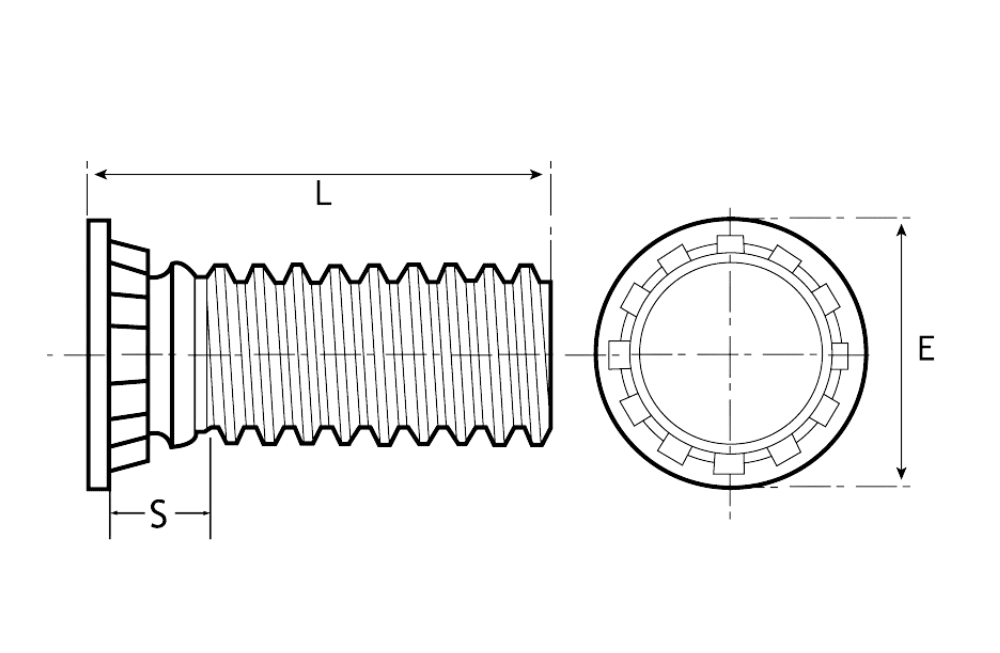
P-FH & P-FHS Types (Metric)
MATERIAL CODES
P-FH – Hardened Steel Zinc Plated
P-FHS – Stainless Steel
STANDARD PLATING FINISH
Zinc & Clear Trivalent Passivation (Z)
General Dimensions
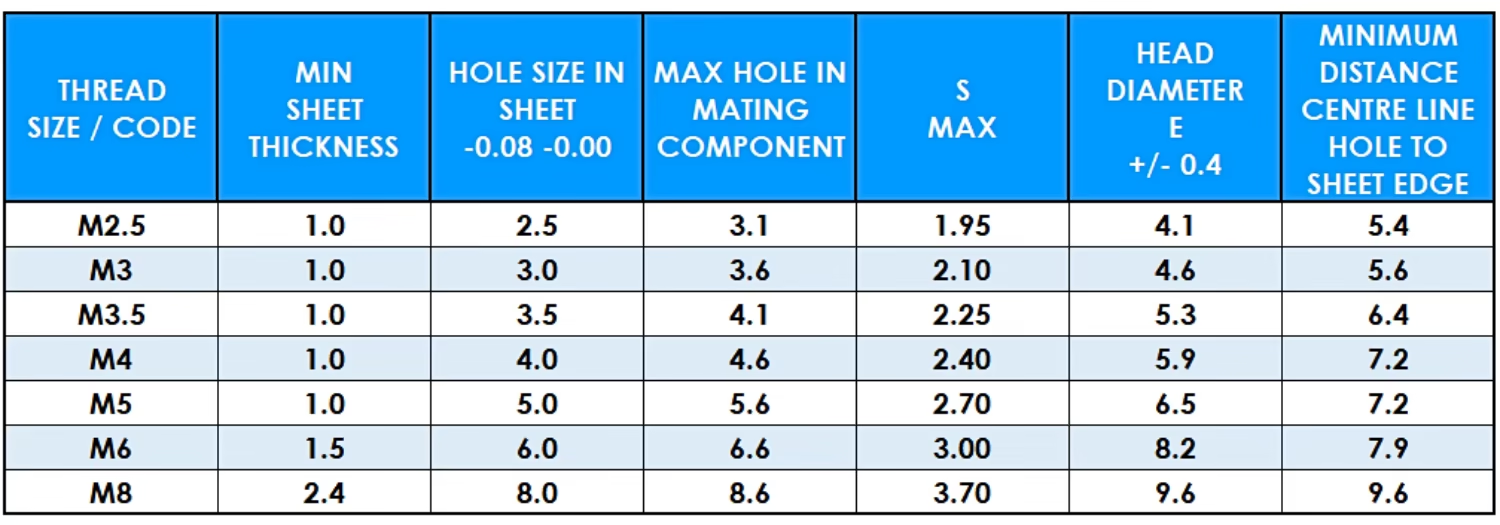
All dimensions in millimeters.
Thread & Length Data

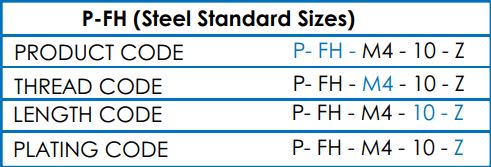
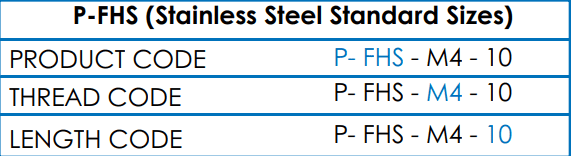
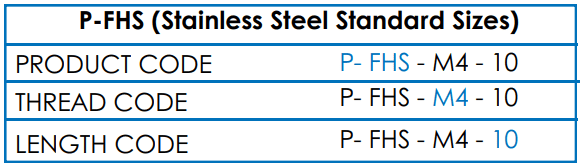
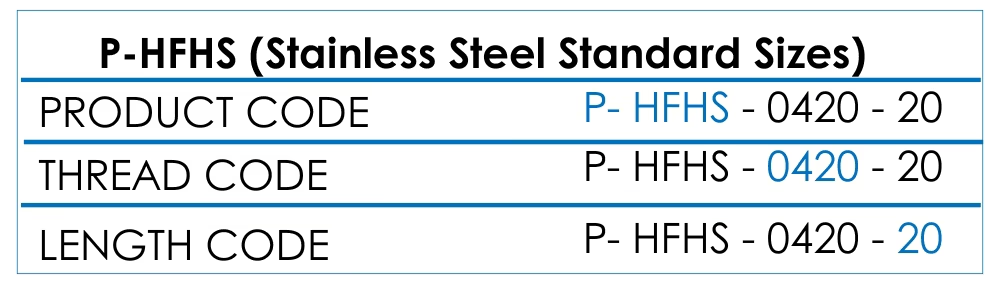
How to Specify PFHS/PFH Self-Clinching Stud
Technical Data
P-FH & P-FHS Types (Unified)
MATERIAL CODES
P-FH – Hardened Steel Zinc Plated
P-FHS – Stainless Steel
STANDARD PLATING FINISH
Zinc & Clear Trivalent Passivation (Z)
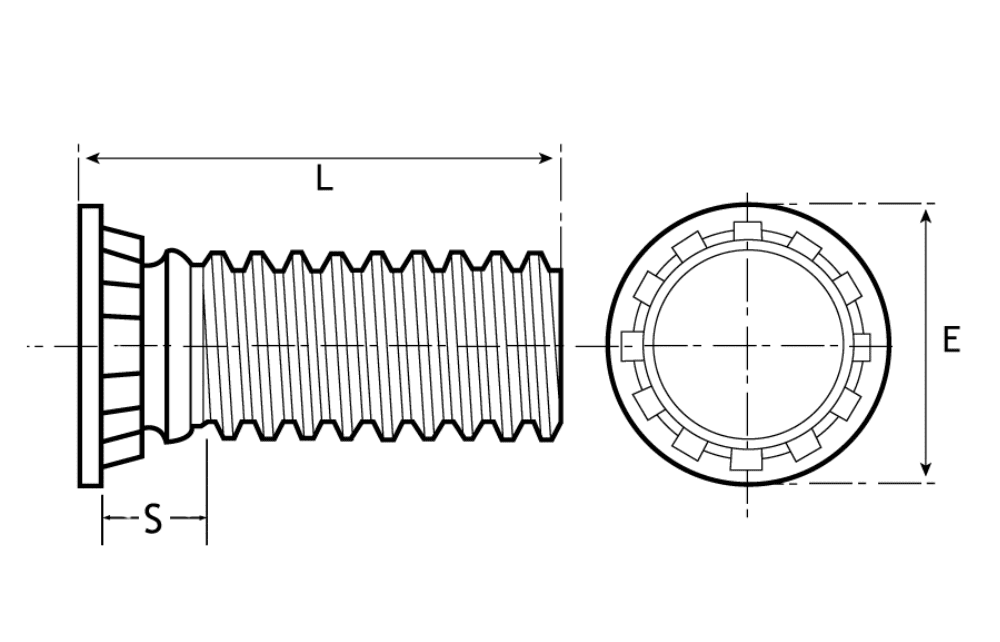
General Dimensions
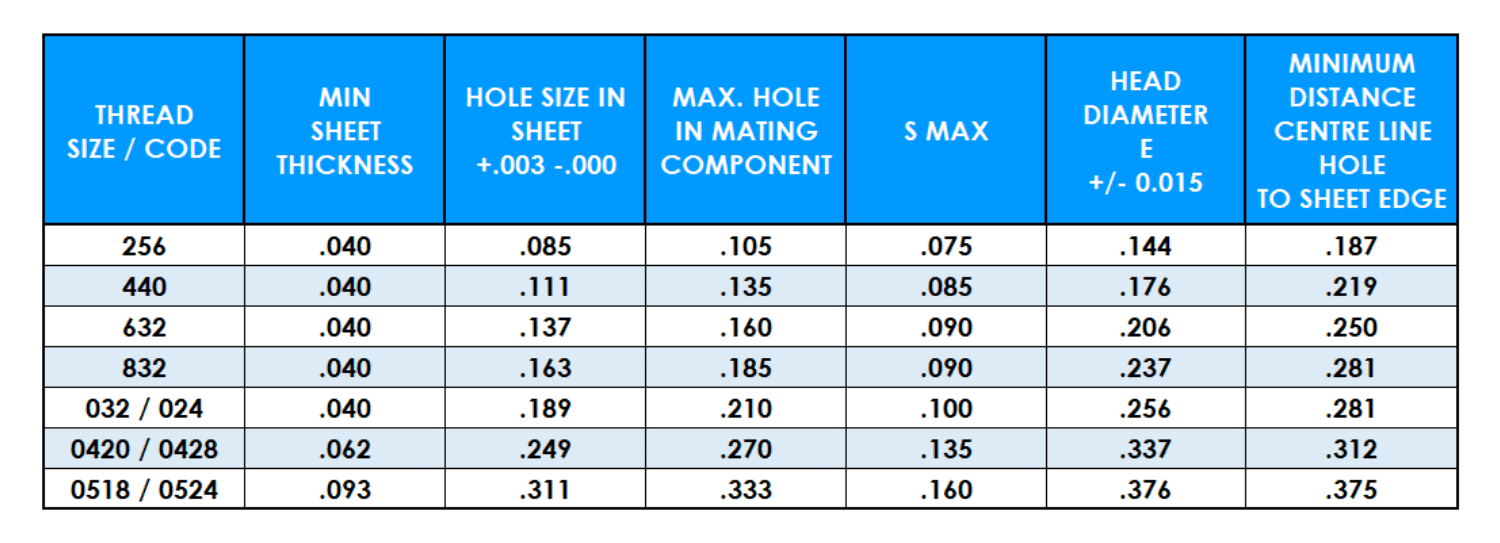
Thread & Length Data

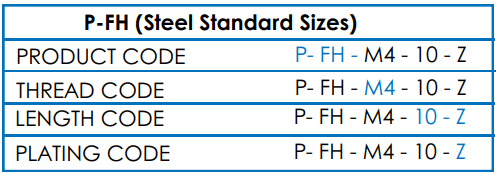
How to Specify
Methods of Assembly
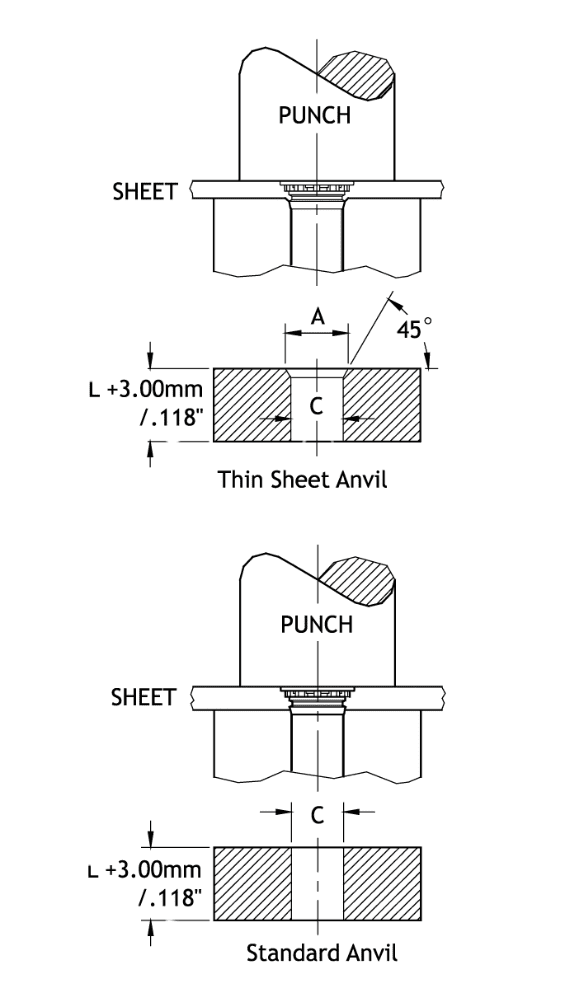
P-FH / P-FHS SELF-CLINCHING STUDS are easy to install because no special tooling is necessary. However, it is very important to note that they must always be installed by a squeeze action press rather than a hammer blow. Punched holes are recommended.
- Punch a hole in the metal sheet to the size recommended in our technical data table. De-burring of the hole is not recommended.
- Insert the stud through the hole in sheet and into the appropriate anvil as detailed below.
- Apply squeezing pressure sufficient to install the head flush with top face of sheet.
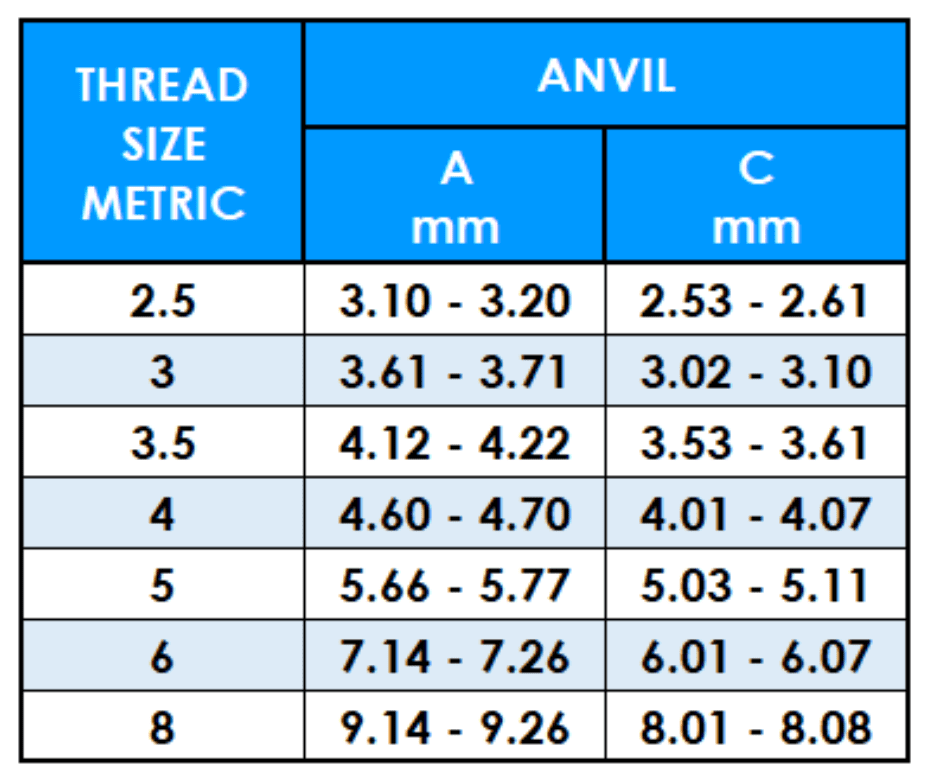
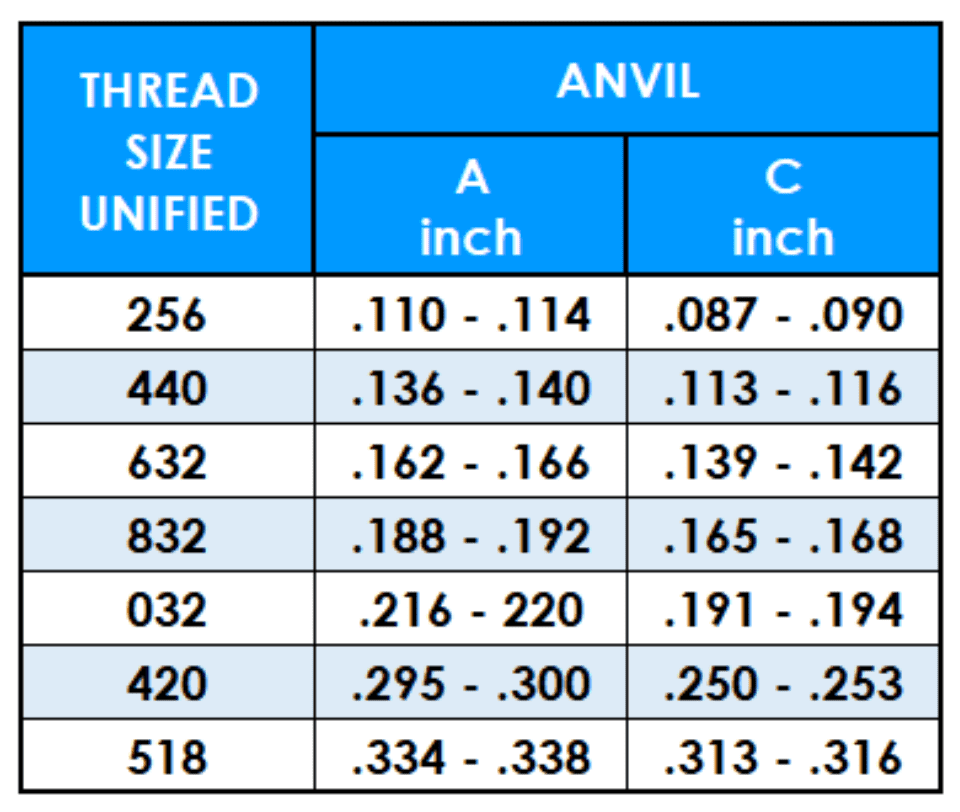
Thin Sheet Anvil Use
M2.5 – M5 for sheet 1.0 – 1.49
M6 for sheet 1.5 – 2.4
M8 for sheet 2.0 – 2.4
256 – 032 for sheet .040″ – .060″
0420 for sheet .062″ – .092″
0518 for sheet .078″ – .092″
Performance Data
Metric
Unified
P-HFH & P-HFHS Self-Clinching Stud
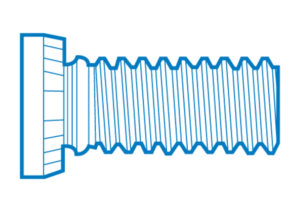
P-HFH / P-HFHS SELF-CLINCHING STUDS have been designed to achieve higher levels of performance than the P-FH range of fasteners for applications that do not demand a flush finish condition.
Advantages
- Easy to assemble with any squeeze press
- High torque resistance
- Visual proof of security
- Always perpendicular to panel
- Made from through-hardened steel for high thread strength
Design Guide
Hole Preparation
It is recommended that the holes are formed using a punch operation, although drilled holes may be used.
Hole Size
Holes must be held to a tolerance of -0.00mm + 0.13mm (-.000″ +.005″).
Minimum Sheet Thickness
See product data sheets and method of assembly.
Maximum Sheet Hardness
Rb80 for Steel Studs (P-HFH)
Rb70 for Stainless Steel Studs (P-HFHS)
Installation
Using a squeeze action, apply sufficient force to fully embed the teeth into the host sheet metal, bringing the head in contact with the sheet. See PERFORMANCE DATA for recommended forces. The head of the stud is not designed to be installed flush.
Tooling Note
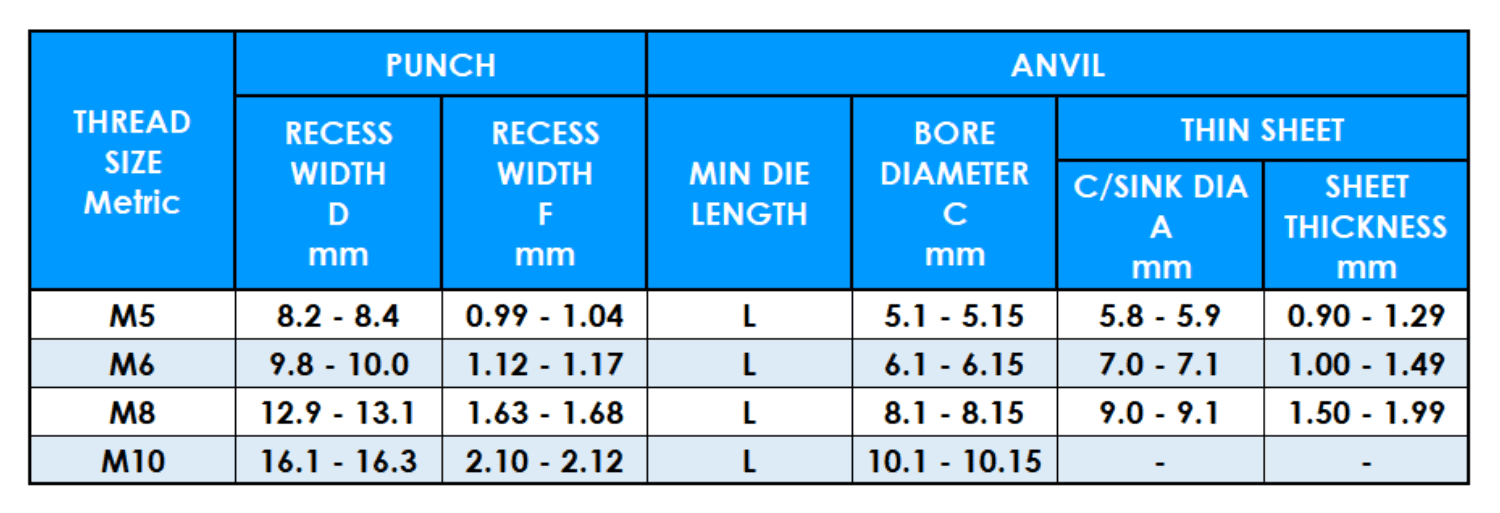
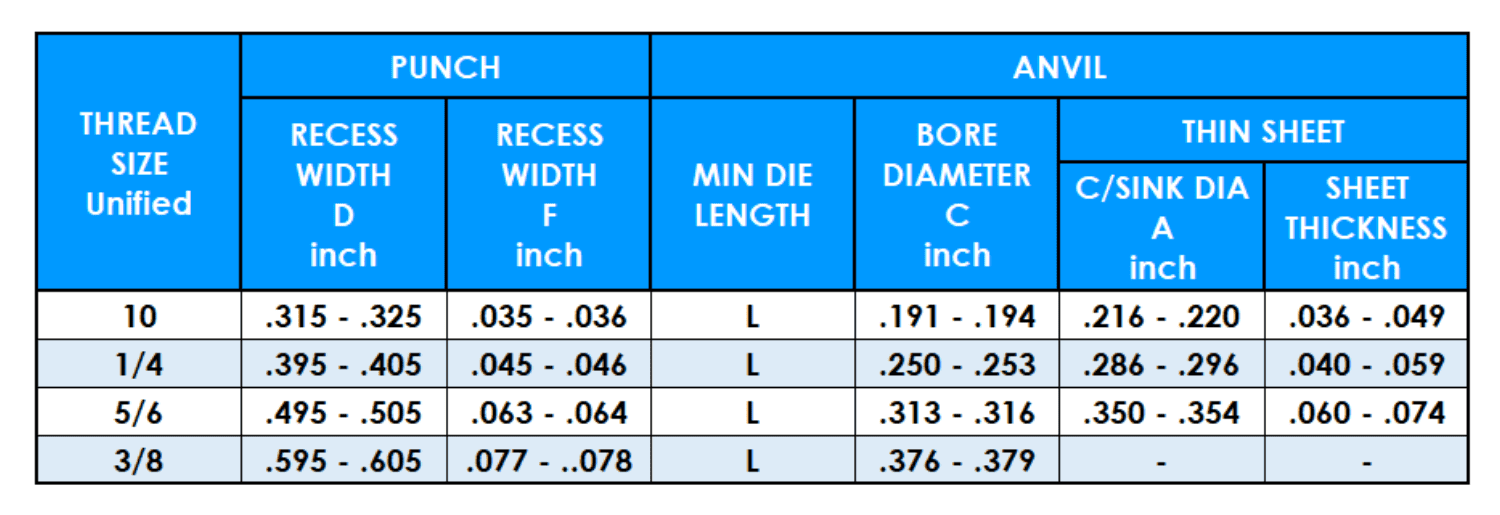
Studs are installed using a recessed top punch to control the insertion depth and a flat bottom anvil with a clearance hole to accept the threaded section of the stud.
Where the sheet material is thin, a special thin sheet bottom anvil is required which includes a countersink at the top to create space for the clinch ring and displaced sheet material. See METHODS OF ASSEMBLY page for details.
Technical Data
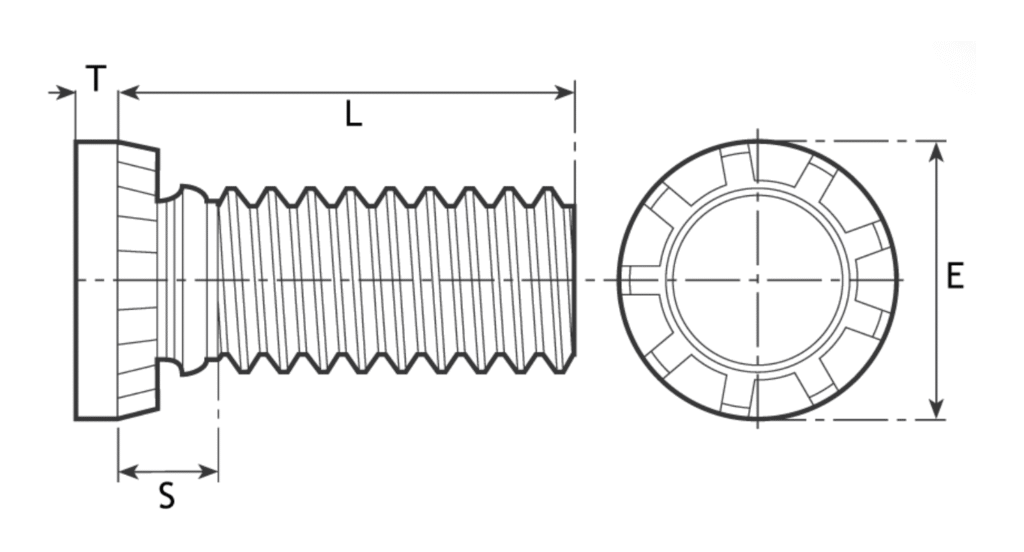
P-HFH & P-HFHS Types (Metric)
MATERIAL CODES
P-HFH – Hardened Steel Zinc Plated
P-HFHS – Stainless Steel
STANDARD PLATING FINISH
Zinc & Clear Trivalent Passivation (Z)
Metric
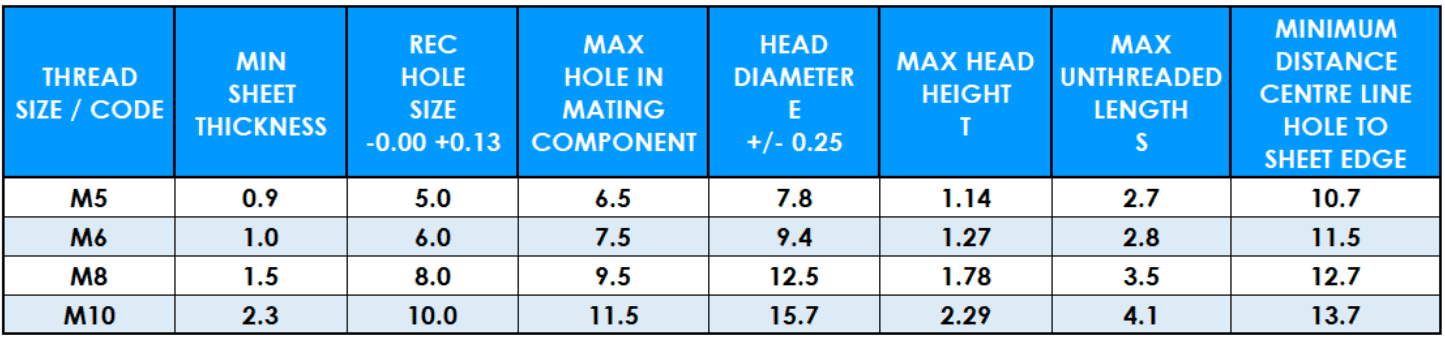
All dimensions in millimeters.
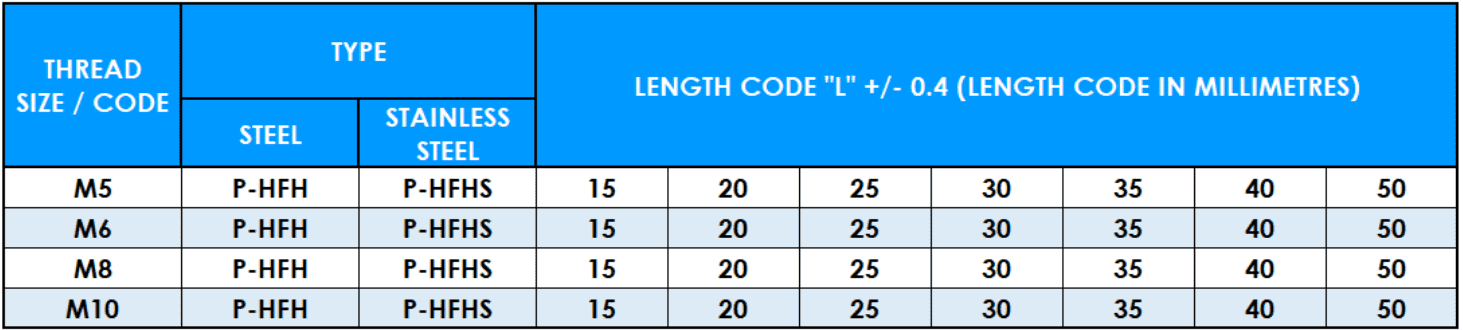
Thread & Length
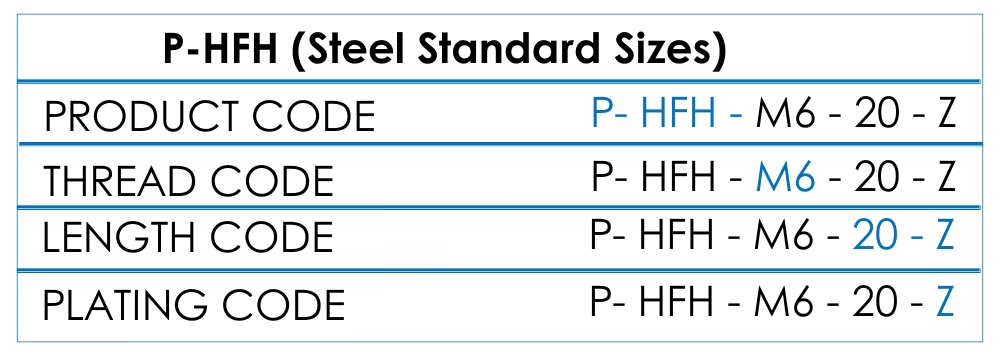
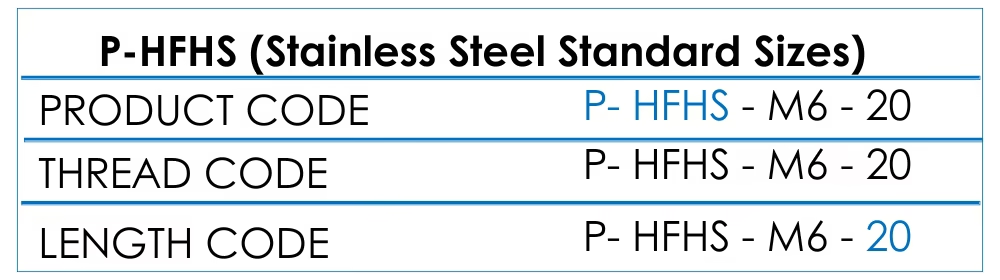
How to Specify
Technical Data
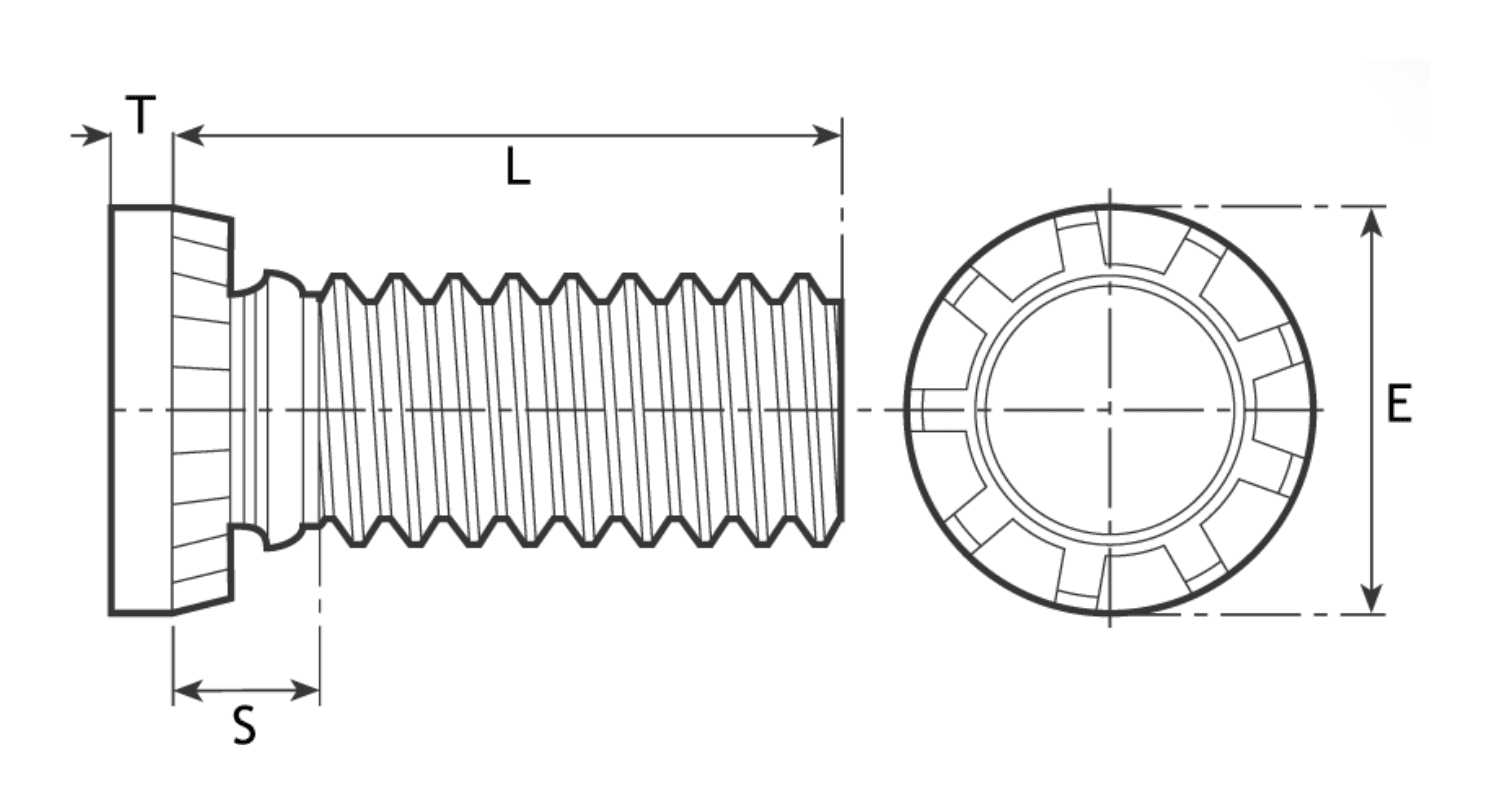
P-HFH & P-HFHS Types (Unified)
MATERIAL CODES
P-HFH – Hardened Steel Zinc Plated
P-HFHS – Stainless Steel
STANDARD PLATING FINISH
Zinc & Clear Trivalent Passivation (Z)
Unified
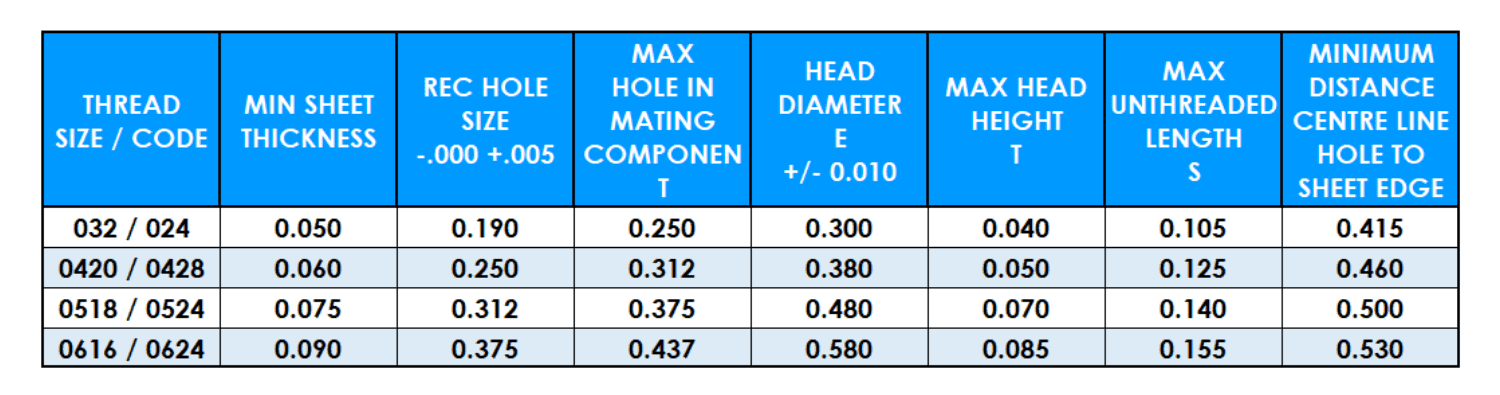
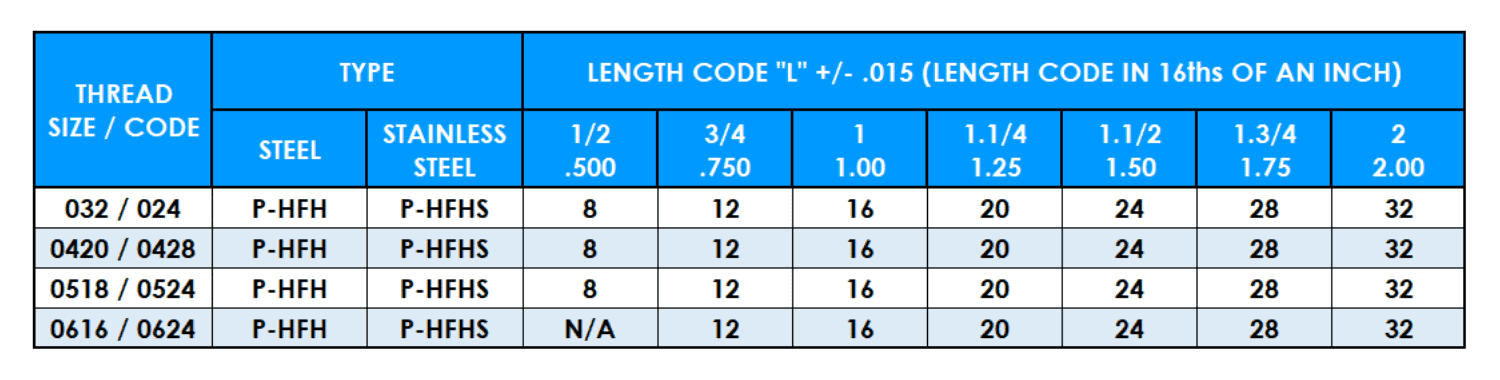
Thread & Length Data
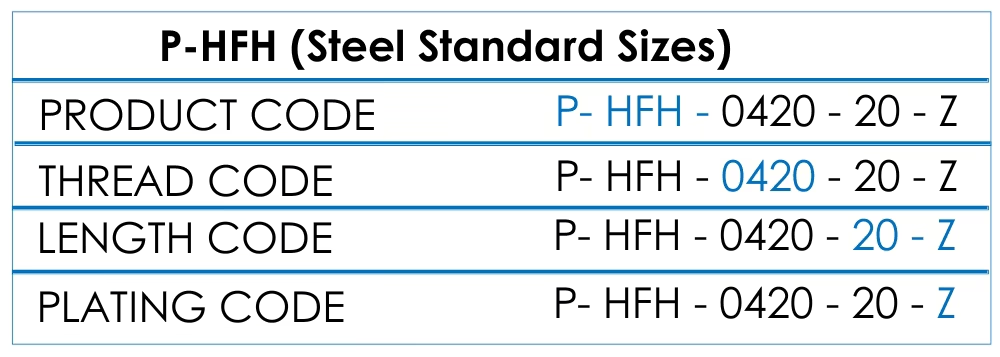
How to Specify
Metric
Unified
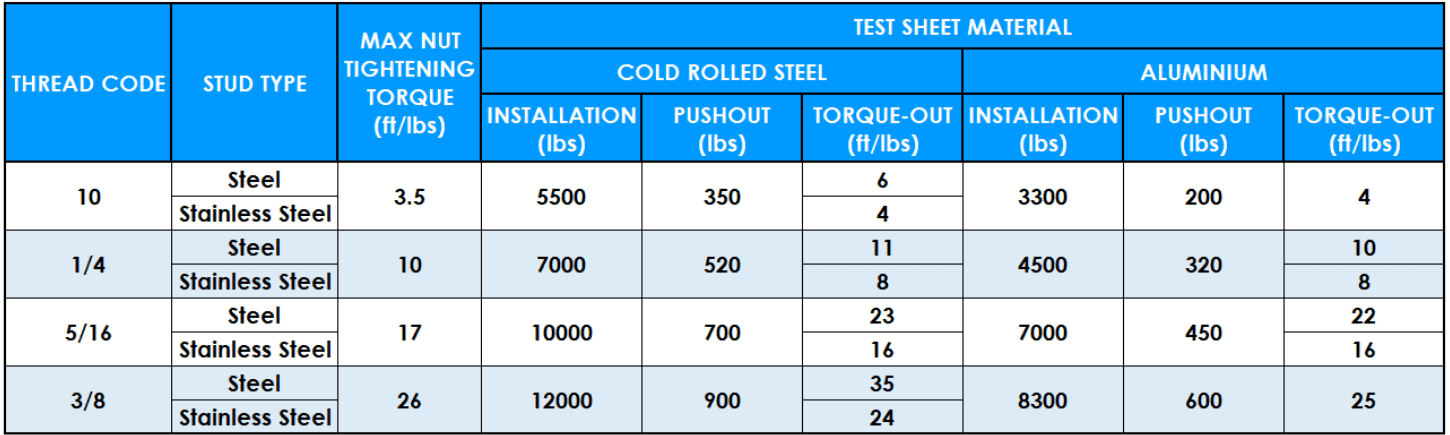
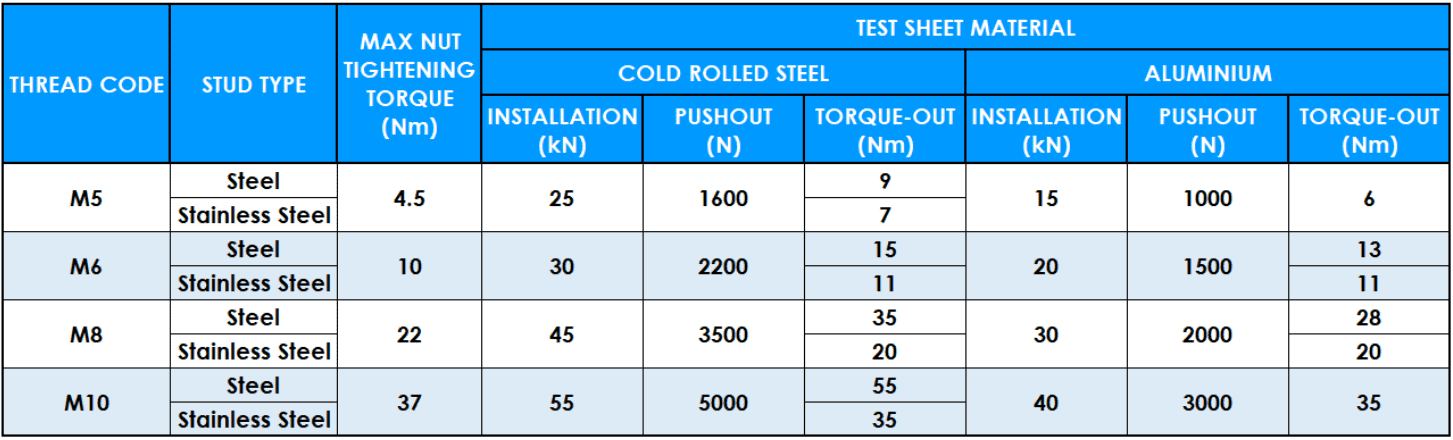
Note: The above values are averages when correct installation is performed. Variations in hole size, material and installation will affect these results. For specific advice we strongly recommend consultation with your PSM Technology Centre.
Methods of Assembly
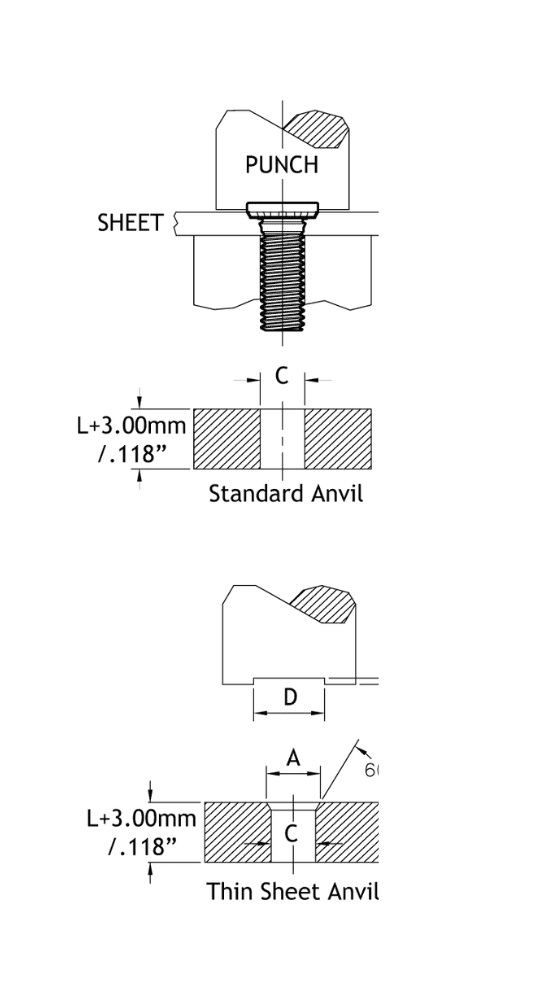
P-HFH / P-HFHS SELF-CLINCHING STUDS are easy to install because only simple tooling is required. However, it is very important to note that they must always be installed by a squeeze action press rather than a hammer blow. Punched holes are recommended.
- Punch a hole in the metal sheet to the size recommended in our technical data table. De-burring of the hole is not recommended.
- Insert the stud through the hole in sheet and into the appropriate anvil as detailed below.
- Apply squeezing pressure sufficient to fully embed the teeth, bringing the head into contact with the sheet.
Enhance Your Assembly with Our Precision PFH Self-Clinching Stud
Start browsing our products or request a quote today to find the ideal fastening solution for your application.