PSM FASTENERS IS CERTIFIED: ISO 9001:2015
Call us 7:30am to 4:30pm Mon-Fri+61 2 9026 8383
FREE shipping for orders above $250!* Excluding international shipping
Fast Shipping
Bulk Discounts
Over 10,000+ Product Variations
Trusted by 100,000+ customers

PF Flush Self-Clinching Nuts

PSM PF FLUSH SELF-CLINCHING NUTS have been designed to provide a thread within the sheet thickness giving a flush finish to both sides.

A simple squeezing action embeds the hexagonal head into the sheet and the displaced metal flows evenly around the undercut shank securely locking it into place.

Advantages

PF Flush Self-Clinching Nuts Design Guide

Hole Size in Sheet

Holes must be held to a tolerance of -.000” +.003” (-0.00mm +0.08mm) Therefore punched holes are recommended. Holes must not be de-burred or chamfered.

Installation

Must always be carried out using a squeeze action – NEVER a shock load.

Sheet Hardness

Must be less than 70RB (128VPN).

Sheet Thickness

See dimensions table.

Shank Number

Always use the longest shank possible for the sheet thickness. This will optimize the stripping strength and resistance to side loads.

Direction of Load

P-F fasteners should always be loaded from the pilot end. See maximum screw tightening torque to prevent overloading of head or thread.

Technical Data
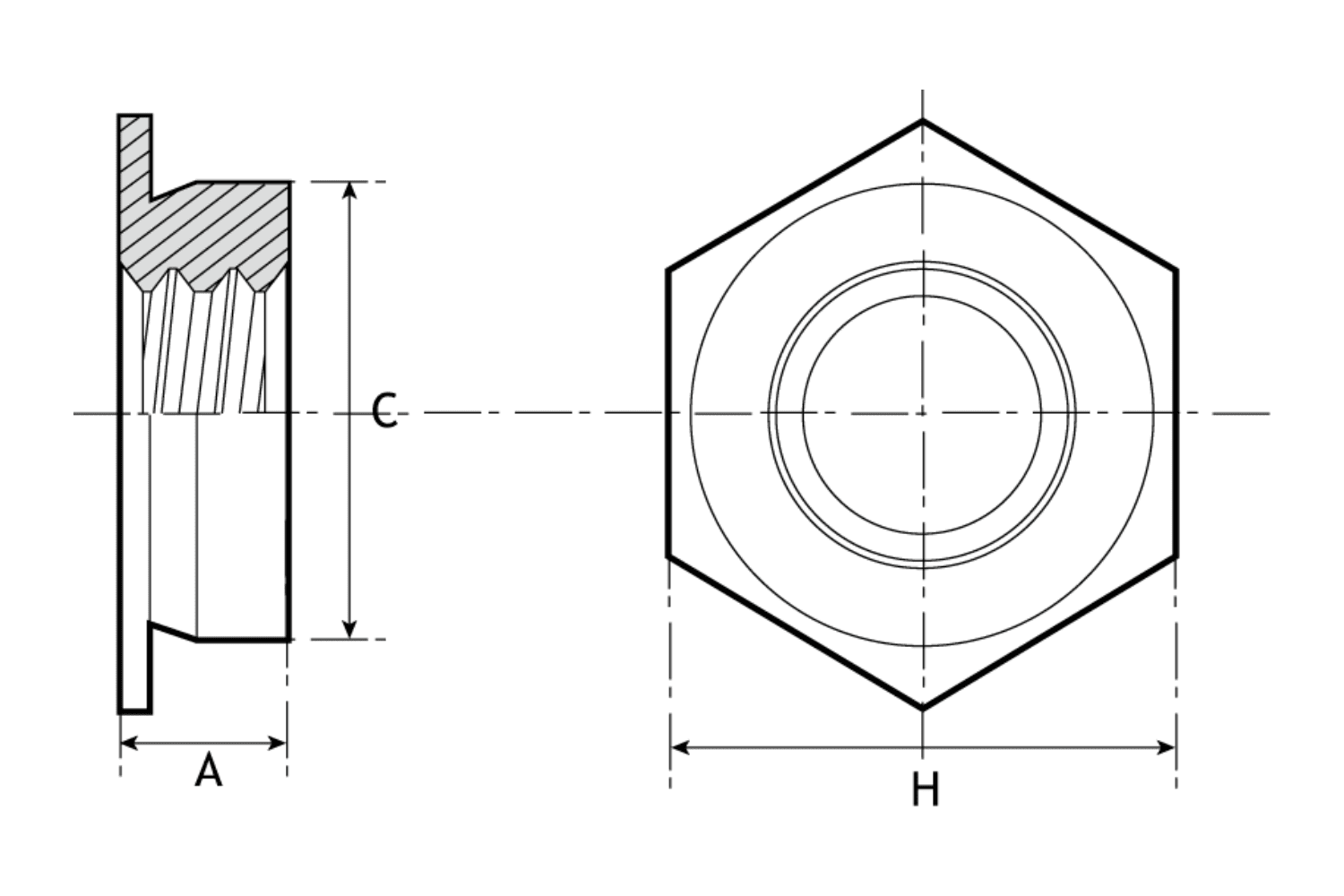
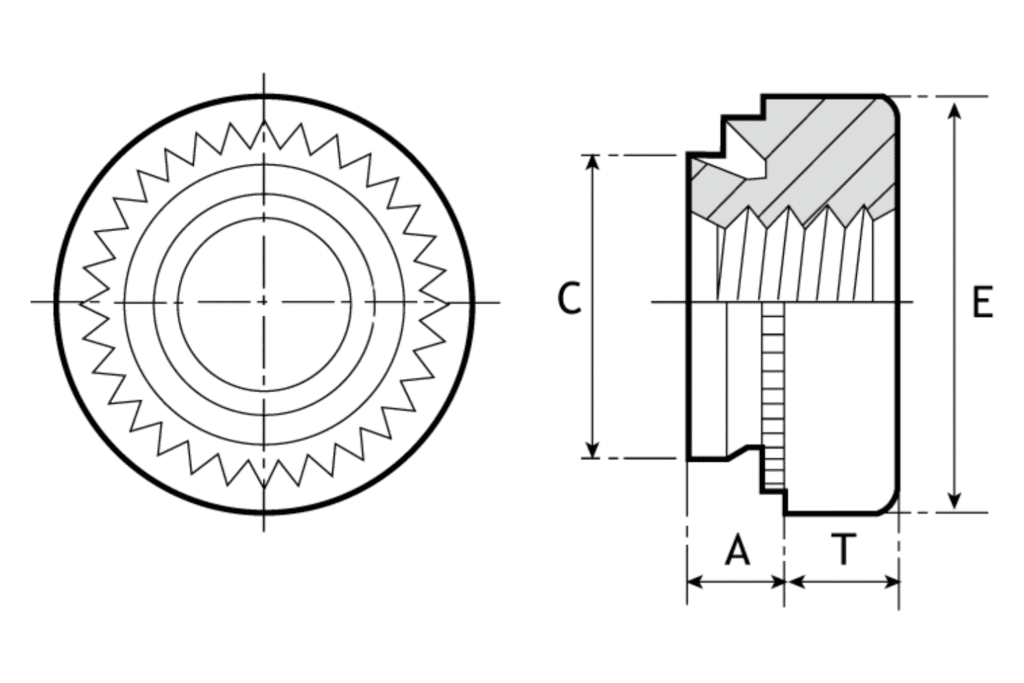
Diagram of PF Flush Self-Clinching Nuts measurements

P-F Type (Metric)

MATERIAL CODES
P-F – Stainless Steel

MAXIMUM SHEET HARDNESS
P-F = Rb 70

Metric
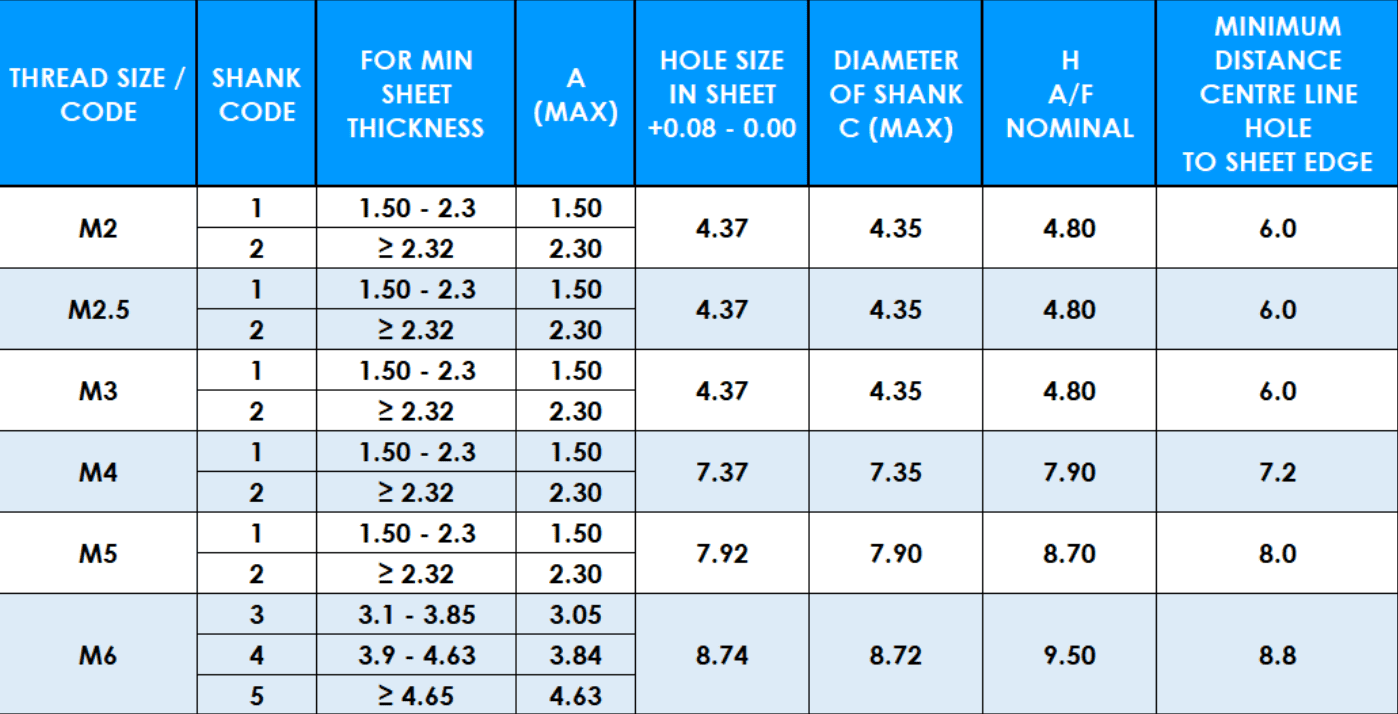
Table showing PF Flush Self Clinching Nuts metric thread data

All dimensions in millimetres.

How to Specify
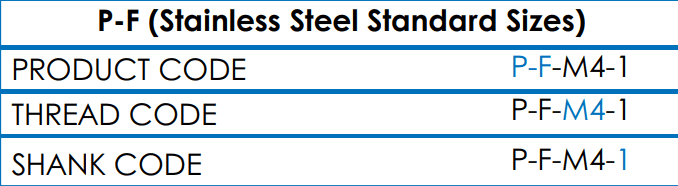
Table showing PF Flush Self Clinching Nuts stainless steel standard sizes

Technical Data

Diagram showing P-S & P-CLS Self Clinching Nuts measurements

P-F Type  (Unified)

MATERIAL CODES
P-F – Stainless Steel

MAXIMUM SHEET HARDNESS
P-F = Rb70

Unified
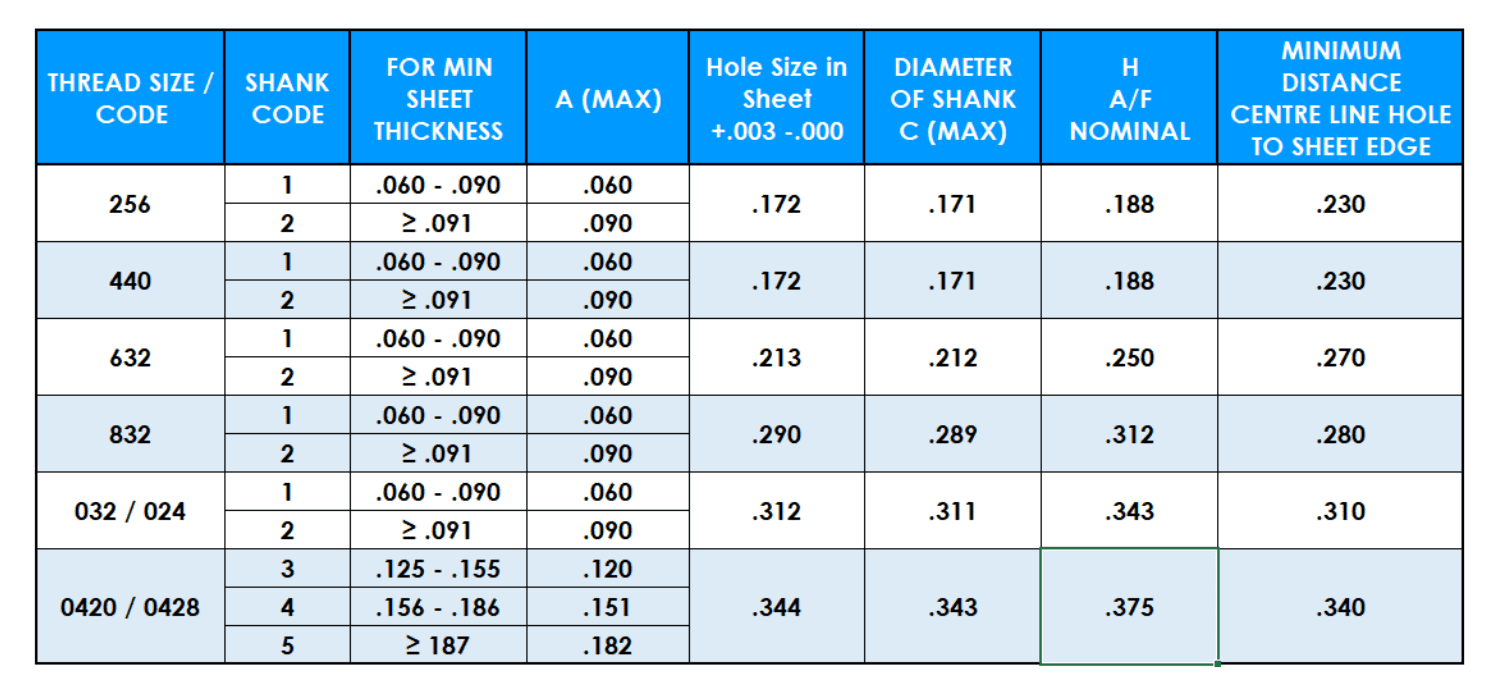
Table showing PF Flush Self-Clinching Nuts unified thread data
All dimensions in inches.

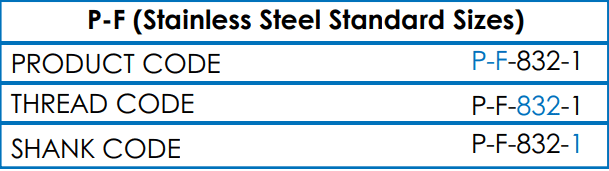
How to Specify

Table showing PF Flush Self-Clinching Nuts unified stainless steel standard sizes

Methods of Assembly

P-F SELF-CLINCHING NUTS are easy to install because no special tooling is necessary. However, it is very important to note they must always be installed by a squeeze action press rather than a hammer blow. Punched holes are always recommended.
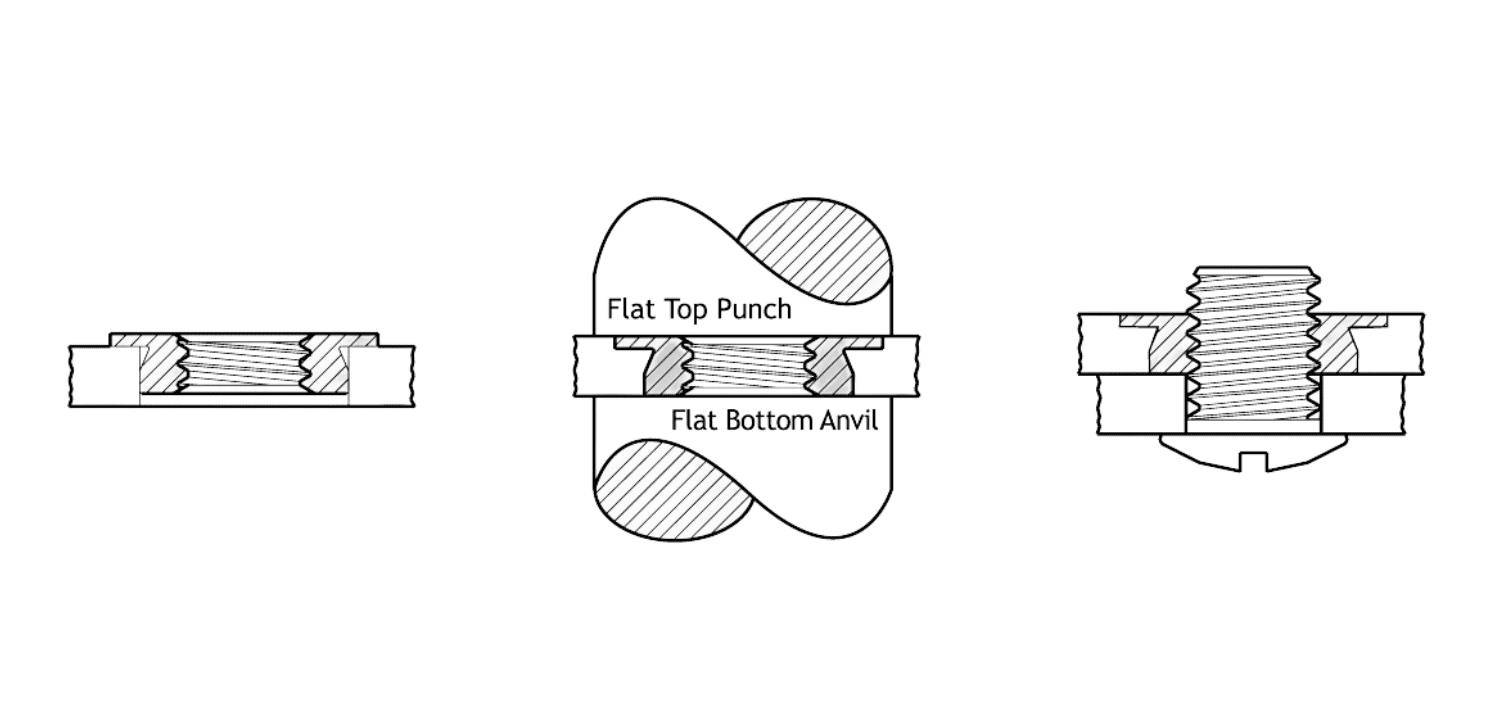
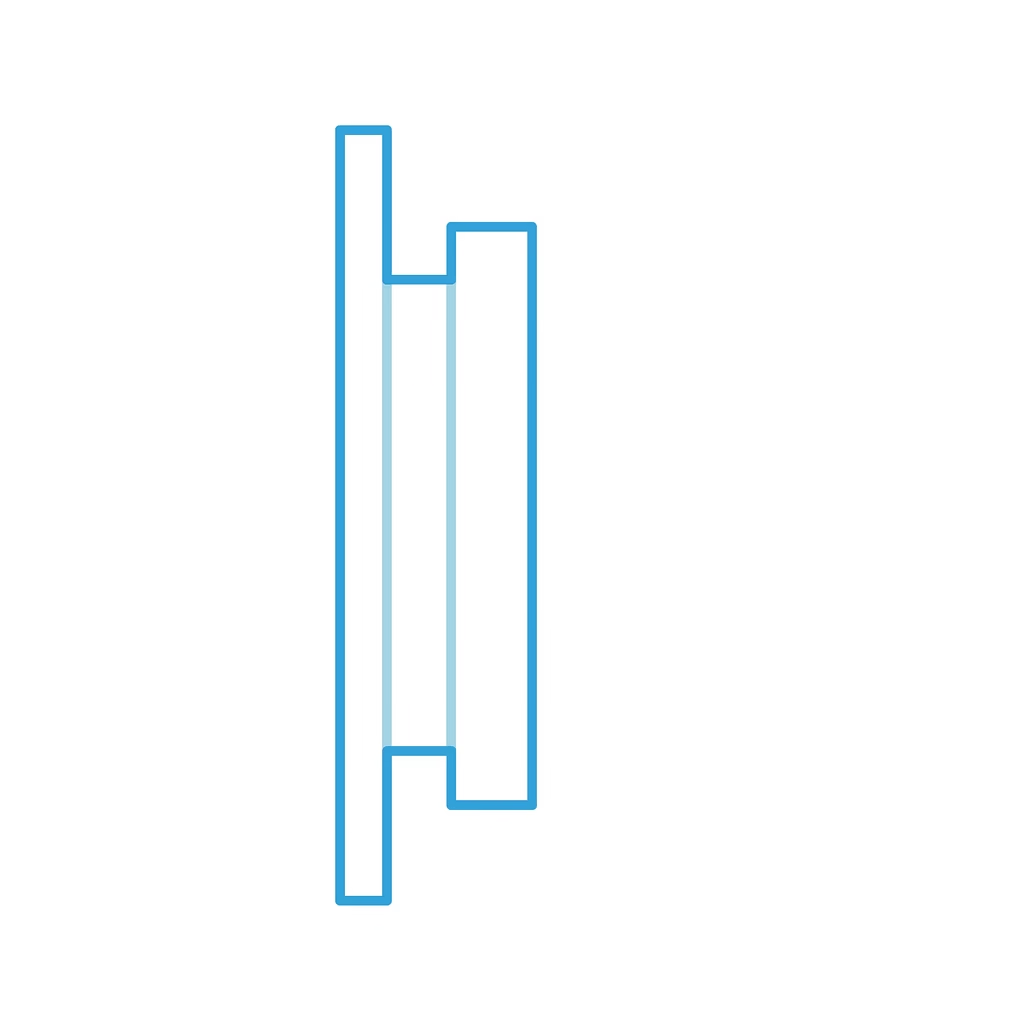
Diagram showing PF Flush Self Clinching Nuts assembly
  1. Punch a hole in the metal sheet to the size recommended in our technical data table. De-burring of the hole is not recommended.
  2. Insert the shank of the fastener into the hole.
  3. Apply squeezing pressure sufficient to embed hexagonal head flush in sheet.

Performance Data

Metric
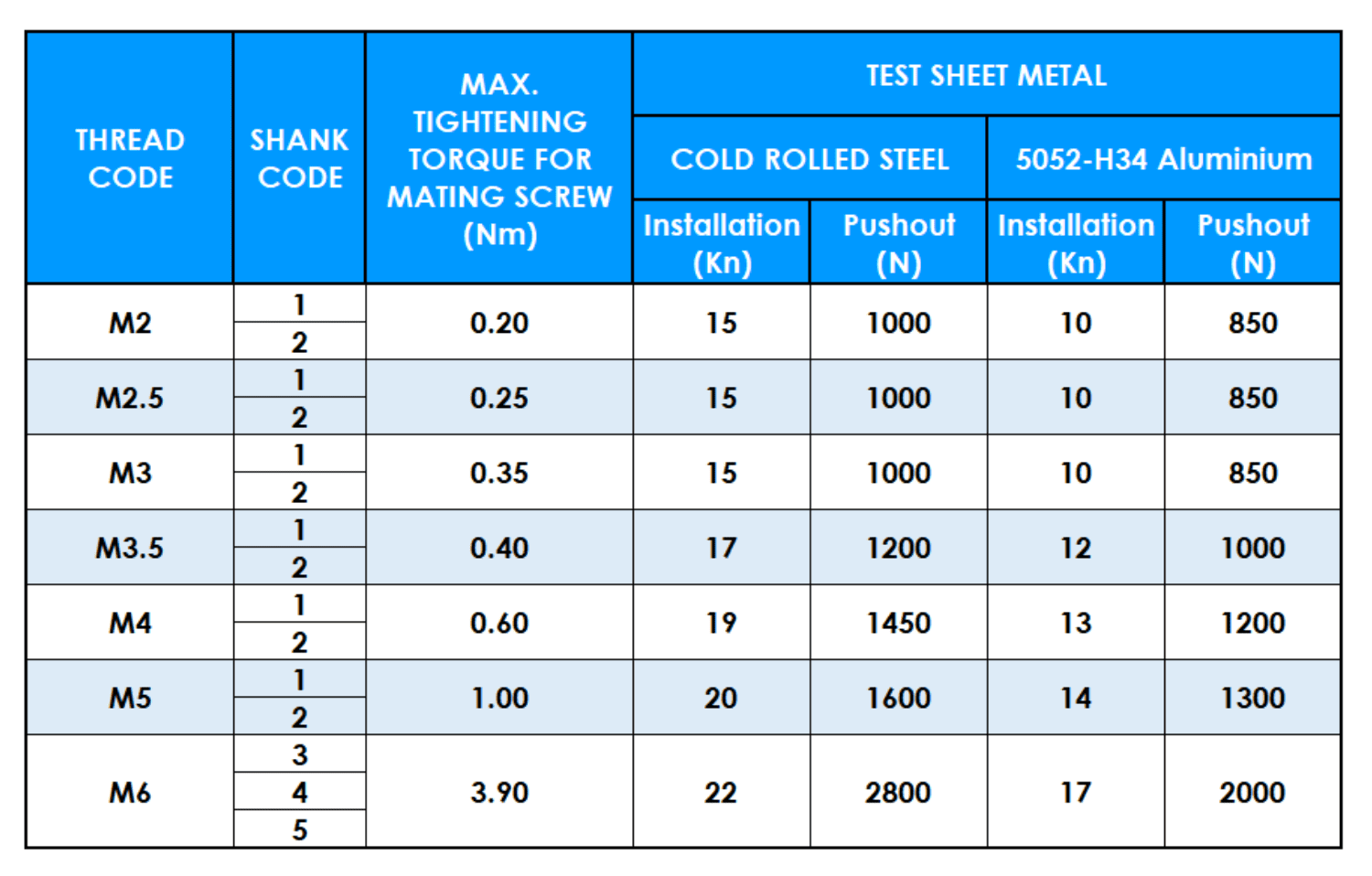
Table showing PF Flush Self Clinching Nuts metric performance data

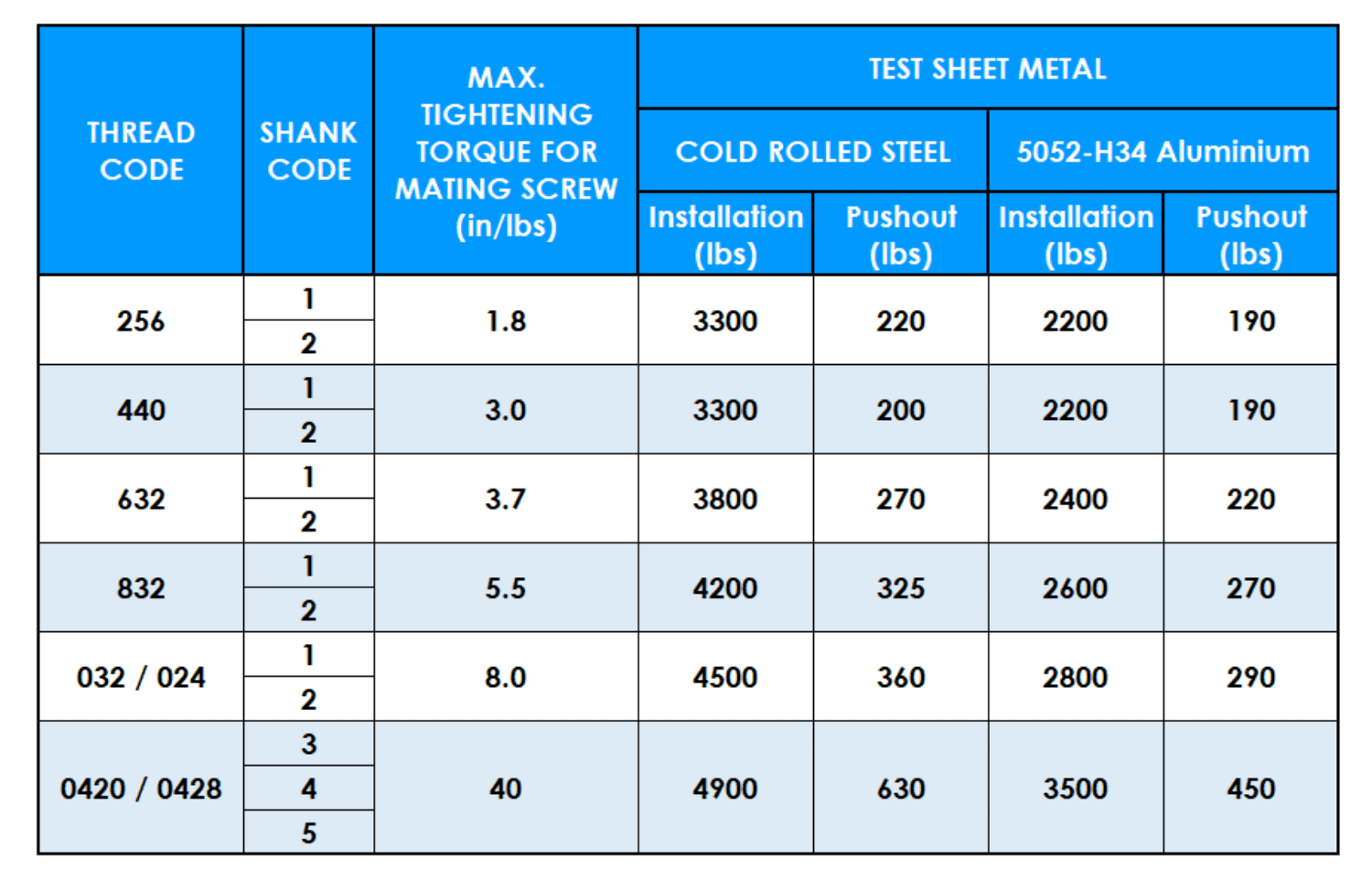
Unified

Table showing PF Flush Self Clinching Nuts unified performance data
Note: The above values are averages when correct installation is performed. Variations in hole size, material and installation will affect these results. For specific advice we strongly recommend consultation with your PSM Technology Centre.

Enhance Your Assembly with Our Precision PF Flush Self-Clinching Nuts


Start browsing our products or request a quote today to find the ideal fastening solution for your application.

Frequently Asked Questions About PF Flush Self-clinching Nuts

What is a PF flush self-clinching nut?

A PF flush self-clinching nut (also called a P-F nut) is a type of press-in threaded fastener designed to install permanently into thin sheet metal panels. Unlike standard self-clinching nuts that protrude slightly, the PF variant installs completely flush on the blind side of the sheet — meaning the bottom of the nut sits level with or below the sheet surface. This makes it ideal for applications where a smooth, unobstructed surface is required on both sides of a panel.
PF flush self-clinching nuts are designed for use in relatively thin sheet metal, typically in the range of 0.5 mm to 3.2 mm depending on the specific part number and thread size. The minimum sheet thickness must be sufficient to ensure the displaced material fills the nut’s clinch groove to achieve full push-out and torque-out resistance. PSM’s product datasheets for each P-F part number specify the exact minimum and maximum sheet thickness for reliable installation.
The hole diameter must match the published specification for each individual P-F part number. Using an oversized or undersized hole will result in reduced retention strength or a failed installation. PSM provides a detailed design guide and dimension table for the PF series — these list the exact hole diameter (H), sheet thickness range (t), and minimum edge distance for every thread size. Always refer to the PSM datasheet rather than estimating from generic clinching guidelines.
Choose a PF flush self-clinching nut when: (1) the blind side of the panel must lie flat against another surface or component without a raised nut obstructing fit; (2) you need to minimise overall assembly thickness and cannot accommodate a protruding nut head; (3) aesthetic or cleanroom requirements demand a smooth panel surface; or (4) sliding drawers, doors, or modules must pass close to the sheet surface without obstruction. If a slight protrusion on the blind side is acceptable, a standard P-S or P-CLS self-clinching nut may be more cost-effective.
Self-clinching nuts — including the PF series — require the host sheet material to be softer than the nut body so that the sheet metal flows into the clinch groove under press force. This means PF flush nuts work reliably in low-carbon steel and aluminium alloy sheet. Installation into harder materials such as stainless steel or hardened alloys is generally not recommended without specific engineering validation, as insufficient material flow will reduce retention values. Consult PSM’s technical team to confirm suitability for your specific sheet alloy and temper.

Search for products

Product has been added to your cart

Request a Quote