
Fast Global Shipping
Bulk Discounts
Over 10,000+ Product Variations
Trusted by 100,000+ Customers
Prevailing Torque Nuts
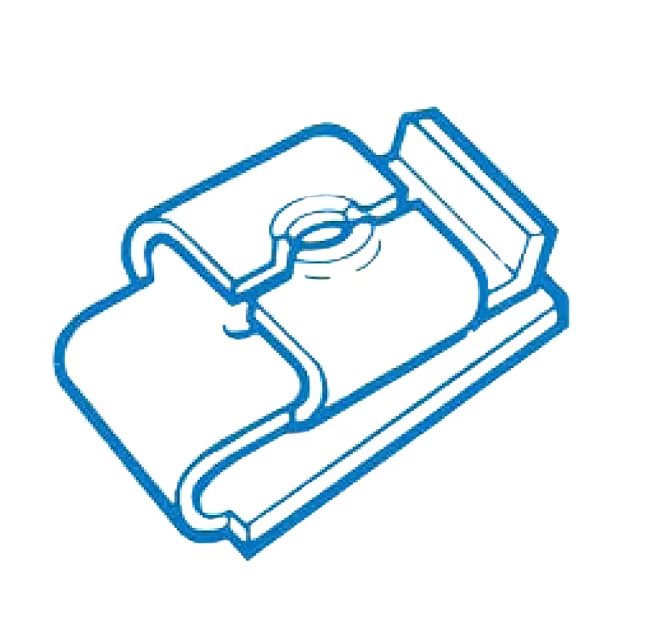
PSM Prevailing Torque Nuts are spring steel fasteners engineered to maintain a locking force on screws even under vibration, thermal cycling, or repeated use. Unlike standard nuts that rely solely on friction, prevailing torque nuts incorporate built-in locking features (e.g. deformation, interference, or spring action) that resist loosening. In assemblies combining plastic panels or mixed materials, these nuts help secure joints without needing additional locking hardware like washers or adhesives.
Advantages
- Higher installation torque than conventional U-Nuts
- High vibration resistance
- Screw will not loosen even in low torque applications
- Non-paint clogging
- Reusable
METHOD OF ASSEMBLY:
Exactly the same as conventional ‘U-Nut.
MATERIAL
CS50, CS60 carbon steel, austempered
WHEN SPECIFYING, PLEASE STATE:
- Quantity
- Prefix (CBTN)
- Part No.
- Finish code (e.g. 14000 CBTN-0361-08)
Key Features
- Self-locking action: Through interference or spring action, the nut provides resistance to turning, which helps prevent fasteners from vibrating loose.
- Reusable locking capability: Many prevailing torque nut designs retain some of their locking ability over multiple assembly cycles.
- Compact and efficient: Because the locking mechanism is integrated into the nut, external locking components are often not needed, saving space and reducing parts.
- Temperature and vibration resilience: The spring steel design maintains preload and locking under dynamic conditions and thermal expansion variations.
- Compatibility with plastic hosts: When used in plastic or plastic-metal hybrid assemblies, they can reduce the risk of stress on the plastic by localizing locking forces.
Design & Specification Guidelines
Nut / Locking Type & Geometry
- Some prevailing torque nuts use a top flange with interference, others a deformed thread segment, and yet others a spring tab or camming surface. Choose the style appropriate to your assembly needs.
- The amount of interference or spring deformation should be controlled so as not to overstress mating parts or cause excessive insertion torque.
Material & Finish
- Spring steel (e.g. CS60 / CS70) is commonly used for the nut body and locking features.
- Surface coatings (zinc plating, passivation, or low-friction finishes) help control friction, reduce galling, and protect both the nut and screw threads.
Panel & Host Design
- The panel or substrate must be stiff enough to support the forces transmitted by the prevailing nut without undue deflection or damage.
- In plastic regions, reinforce with ribs or thicker materials to avoid stress concentration near the nut area.
Dimensional Data & Sizes

| PART NO. |
SCREW SIZE |
A | B | C | D | H DIA |
T | PANEL RANGE |
|---|---|---|---|---|---|---|---|---|
| 0350 | 8 | 16.7 | 11.1 | 6.7 | 7.9 | 7.1 | 0.56 | 0.71 - 1.62 |
| 0356 | 8 | 16.7 | 11.1 | 6.7 | 7.9 | 7.1 | 0.56 | 1.83 - 2.03 |
| 0391 | 8 | 16.7 | 11.1 | 6.7 | 7.9 | 7.1 | 0.56 | 3.00 |
| 0351 | 10 | 19.8 | 12.7 | 7.9 | 9.5 | 7.9 | 0.71 | 0.91 - 2.64 |
| 0359 | 10 | 19.8 | 12.7 | 7.9 | 9.5 | 7.9 | 0.71 | 2.0 - 3.0 |
| 0361 | 10 | 19.8 | 12.7 | 9.5 | 9.5 | 7.9 | 0.71 | 2.03 - 3.05 |
| 0352 | 12 | 23.8 | 17.0 | 11.1 | 12.4 | 9.9 | 0.81 | 0.91 - 2.64 |
| 0358 | 12 | 23.8 | 17.0 | 11.1 | 12.4 | 9.9 | 0.81 | 2.94 - 3.07 |
Dimensions in millimetres
Recommended Installation Torque
| SCREW SIZE |
lbs. ins | N.M. | SCREW SIZE |
lbs. ins | N.M. |
|---|---|---|---|---|---|
| 4 | 6 | 0.68 | 10 UNC | 11 | 1.24 |
| 6 | 12 | 1.35 | 10 UNF | 7 | 0.79 |
| 8 | 18 | 2.03 | 6 BA | 2 | 0.23 |
| 10 | 24 | 2.71 | 4 BA | 4 | 0.46 |
| 12 | 30 | 3.39 | 2 BA | 7 | 0.79 |
| 14 | 42 | 4.75 | 6 mm | 16 | 1.81 |
| 1/4 ACME | 50 | 5.65 | 4 mm | 6 | 0.69 |
| 5/16 ACME | 75 | 8.48 | 1/4 BSW | 20 | 2.26 |
| 2 BA | 7 | 0.79 | |||
| 3/16 BSW | 11 | 1.24 |
| CODE | DESCRIPTION | COLOUR | USAGE |
|---|---|---|---|
| 00 | Blue, oil dipped | Blue temper | Very light corrosive conditions |
| 09 | Phosphate, oil dipped | Dark grey | Light corrosive conditions |
| 13 | Chromate passivated electro plated zinc | Pale translucent yellow | Highly corrosive conditions |
| 08 | Phosphate & zinc chromate paint | Green | Highly corrosive conditions |
| 10 | Phosphate & zinc chromate paint | Black | Highly corrosive conditions |
| 11 | Plastic coating | Black | As required |
| 14 | Polyester | Various | As required |
| 22 | Polyseal | Black | Highly corrosive conditions |
| 24 | Dacromet | Silver | Highly corrosive conditions |
Enhance Your Assembly with Our Prevailing Torque Nuts
Start browsing our products or request a quote today to find the ideal fastening solution for your application.
Frequently Asked Questions About Prevailing Torque Nuts
What are Prevailing Torque Nuts and what are they used for?
What makes PSM Prevailing Torque Nuts (CBTN) better than conventional U-Nuts?
PSM Prevailing Torque Nuts (CTBN) nuts deliver higher installation torque than conventional U-Nuts, higher vibration resistance, and ensure the screw will not loosen even in low torque applications. The locking mechanism is built into the nut itself, so no additional lock washers, adhesives, or secondary hardware are needed.
Are PSM Prevailing Torque Nuts reusable?
Yes, Prevailing Torque Nuts are reusable, and many designs retain some of their locking ability over multiple assembly cycles. This makes them well suited for assemblies that need periodic disassembly for service or inspection.
What material are PSM Prevailing Torque Nuts (CBTN) made from?
PSM Prevailing Torque Nuts are made from CS50 or CS60 carbon steel, austempered. Austempering gives the steel a combination of high strength and toughness well suited to the spring-action locking mechanism.
Do Prevailing Torque Nuts work in low torque applications?
Yes, one of their key advantages over standard nuts is that the screw will not loosen even in low torque applications, precisely because the locking force is built into the nut geometry rather than relying entirely on clamp load from the screw.